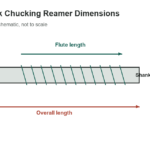
A letter-size chucking reamer designation identifies a nominal cutting diameter, but it does not tell you the complete tool dimensions or the finished hole size by itself. The selected sizes below are from a straight-shank, straight-flute reference series; shank, flute and overall dimensions vary across manufacturers and models. For adjacent tooling references, see our drill-point length chart, tap-drill size chart, and drill-press guide.
Selected letter-size examples
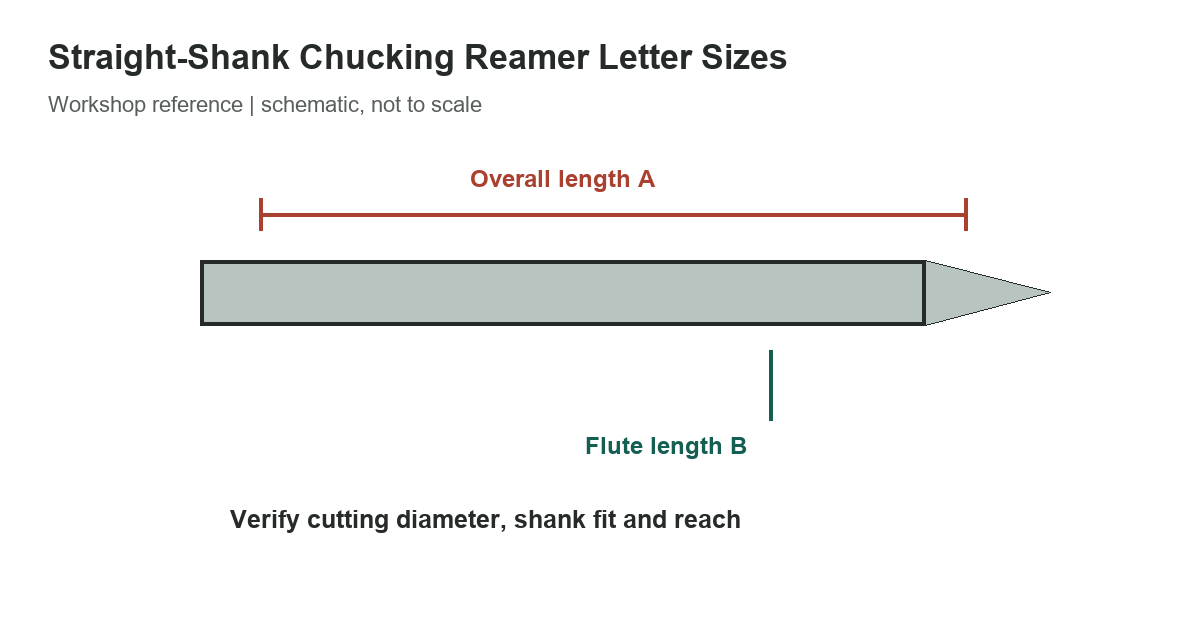
This short selection helps compare the cutting diameter with the shank the holder must grip. It is not the complete A-through-Z series. Dimensions are inches; verify the actual catalog listing, size tolerance, flute count and tool configuration before ordering.
[gs_table id=”10904″]
For example, a letter W reamer in this reference series has a 0.3860-inch cutting diameter and a shank around 0.310 inch. The shank is not the same size as the cutting diameter. A holder selected only by the letter designation could therefore be incompatible if its capacity or collet range does not cover the listed shank.
Distinguish the tool from the hole
A reamer generally finishes a prepared hole; it is not a substitute for drilling or boring a misplaced opening. The pilot-hole diameter depends on the desired stock allowance, work material, tool geometry and manufacturer’s application guidance. Starting with too little stock can cause rubbing or an oversized hole, while too much stock can overload the tool, produce chatter or damage the cutting edges.
The finished hole can differ from the reamer’s nominal size because of runout, spindle alignment, workholding, tool wear, material springback, cutting speed, feed, coolant and chip evacuation. Thin or interrupted features add further uncertainty. For a close-tolerance feature, test the process on representative material and measure the actual bore with an appropriate calibrated instrument.
Check shank, reach and tolerance
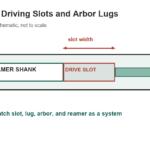
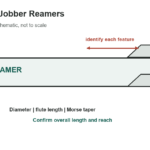
Match the holder to the shank diameter and gripping length, not just the reamer’s cutting size. Avoid gripping the flutes. Check whether the tool has a straight or spiral flute, its flute count and whether its length reaches the full hole depth with clearance. Blind holes may require additional depth for the chamfer and chips; do not force the tool against the bottom of the hole.
The source page identifies a high-speed-steel tool series and gives tolerances for the cutting diameter, overall length, flute length and shank. Those tolerances define the product, not the finished-hole acceptance range. A manufacturing drawing or fit requirement may require a different reamer tolerance class or a specific supplier series. Obtain the current tool documentation for the exact part number.
ASME lists B94.2-1995 as reaffirmed in 2025. Its scope covers reamer terminology, types, sizes and tolerances. That standard’s existence does not mean every dimension from one catalog can be applied to every tool marketed as a chucking reamer. Confirm that the selected tool is actually made to the applicable standard and series.
Set up and inspect deliberately
Secure the part and align the spindle or holder with the prepared hole. Follow the toolmaker’s specified rotation, speed, feed, coolant and material guidance. A handheld drill, drill press and rigid machine spindle have different alignment and stiffness; a setup that works for one operation may not produce a round, straight hole in another.
Measure the hole after machining, and inspect for taper, bell-mouth, chatter and burrs when the fit or surface finish matters. If the result is oversize, do not assume a smaller nominal reamer is the only correction; first check runout, tool condition, stock allowance and measurement technique. Record the tool series, actual reamer diameter, setup and measured bore so the process can be repeated.
Sources
ASME lists the reaffirmed B94.2 reamer standard. See the Toolmex letter-size product listing for a manufacturer-specific example. The selected dimensions are transcribed from the reviewed handbook page; current toolmaker specifications control the exact product and application.