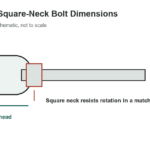
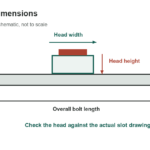
Round-head short square-neck bolts are commonly called carriage bolts, but names alone do not establish that two products share the same dimensions or application. The square neck under the domed head is intended to engage the work and resist rotation as the nut is tightened. The selected dimensions below come from the inch-series reference and are not a bolt-strength, load-capacity or torque chart. For related fastening references, see our bolt and wrench size chart, wood-screw chart, and socket-set guide.
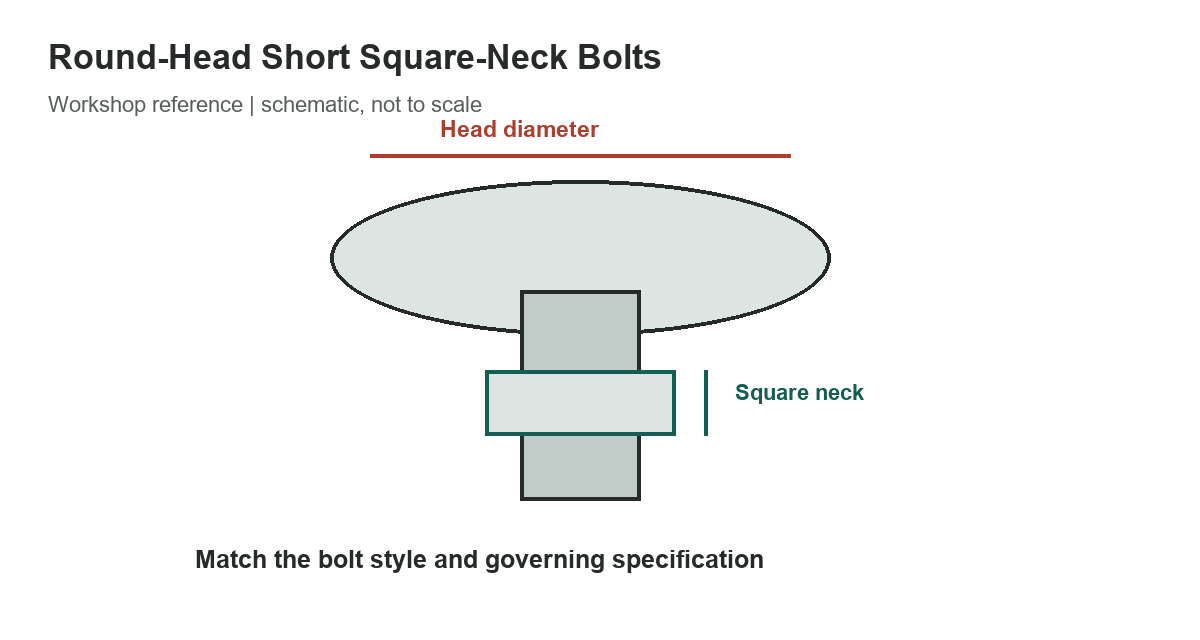
Selected inch-series dimensions
Dimensions are inches and show minimum-to-maximum bounds for four selected nominal sizes. The full specification includes additional sizes, notes, tolerances and other details; consult the governing ASME edition and supplier drawing for the exact fastener.
[gs_table id=”10908″]
A nominal 1/2-inch bolt has a body diameter of 0.500 inch, while the listed head and square-neck dimensions are larger. The square width must match the intended hole or formed recess closely enough to engage without forcing the bolt through an undersized opening. The square depth also affects how much material is needed under the head for the neck to seat.
Confirm the fastener style
ASME B18.5 includes different round-head bolt styles, and the “short square neck” designation is a particular configuration. Do not substitute a large-head style, a metric DIN carriage bolt, an elevator bolt or a proprietary furniture fastener without checking the geometry. Similar appearance does not guarantee interchangeable head diameter, neck dimensions, thread series or length tolerances.
Measure the receiving hole or slot and compare it with the fastener’s specified body and neck dimensions. Wood can compress around the square shoulder; steel or other rigid materials may require a controlled square opening or a clearance feature. Account for coatings and manufacturing variation. Avoid hammering a bolt into a hole if that could split the material, damage threads or distort the fastener.
Length, thread and material are separate choices
Fastener length is measured from beneath the head to the end for this bolt style. Select enough length for the joined material, washer and nut while preserving the required thread engagement. The amount of thread under the head, allowable grip length and available standard lengths depend on the nominal size and fastener specification. Consult the applicable table rather than estimating from head height.
Dimensions do not establish strength. Tensile strength, proof load, shear capacity, fatigue resistance and corrosion suitability depend on material, grade or property class, heat treatment, thread engagement, installation and loading. A carriage bolt should not be assumed to be a structural replacement for a bolt designed and specified for a critical joint.
Likewise, do not infer a tightening torque from this chart. Torque recommendations depend on thread size and pitch, material and finish, lubrication, nut type, washer arrangement and the desired preload. For vehicle, lifting, structural or machinery connections, follow the engineered design and the equipment maker’s service information.
Check the standard and supplier data
ASME’s B18.5-2012 document identifies the inch-series round-head bolt standard. Confirm whether the contract, jurisdiction or drawing calls for that edition or a later adopted requirement. Suppliers may offer products that meet a named dimensional standard but differ in grade, material, finish, thread coverage or manufacturing tolerance.
Before installation, verify nominal diameter, thread pitch, head style, square-neck dimensions, length, material, grade and finish against the part specification. Inspect for damaged threads, bent shanks, distorted heads and coating defects. Use a nut and washer that are compatible with the fastener, and replace components that do not meet the specified condition.
The four rows here are intended for initial identification and fit checks only. They do not certify a product as compliant or suitable. When the connection carries a safety-critical load, use the full standard, the supplier’s certified documentation and a qualified fastener or structural engineer’s direction.
Sources
See the ASME B18.5-2012 publication and this supplier listing for a 1/2-inch carriage bolt. Verify the exact standard edition and item specification before use.