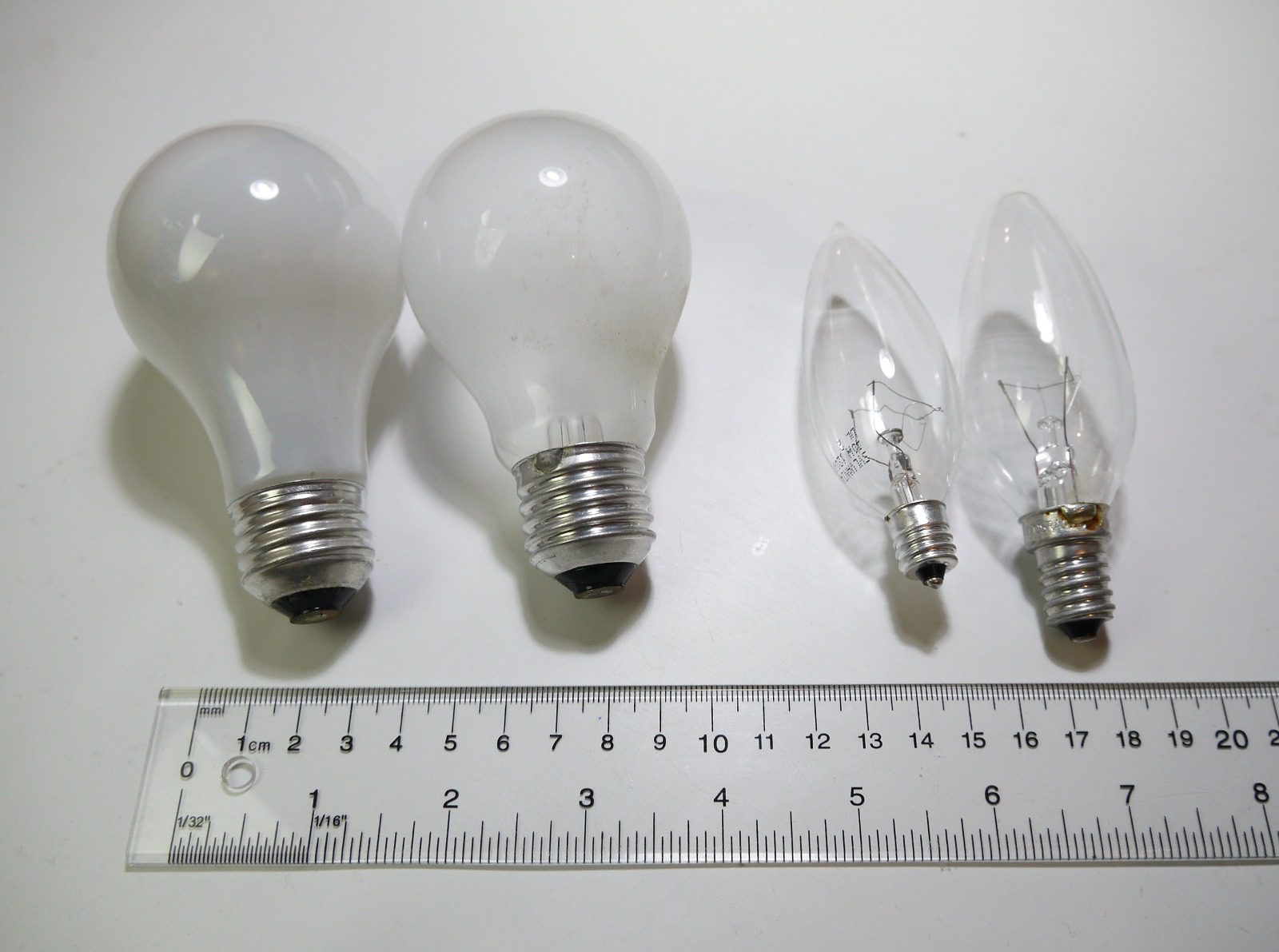
Light Bulb Socket Sizes Chart
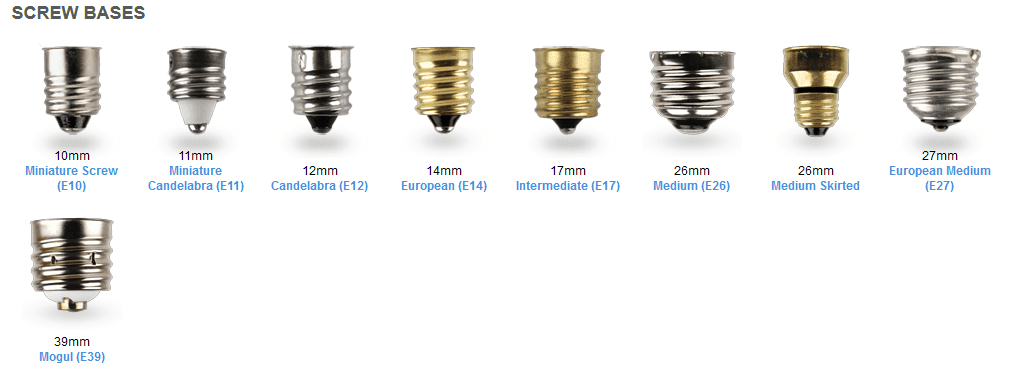
Quick answer: Edison screw bulb bases use the letter E plus the approximate thread diameter in millimeters. E12 is a 12 mm candelabra base, E17 is an intermediate base, E26 is the common North American medium base, and E39 is a mogul base for larger high-output lamps.
Light Bulb Socket Size Chart
| E10 | 10 mm | Miniature screw | Flashlights, indicator lamps, small specialty bulbs | Low-voltage and specialty applications are common |
|---|---|---|---|---|
| E11 | 11 mm | Mini candelabra | Some halogen and specialty fixtures | Close to E12 but not interchangeable in many fixtures |
| E12 | 12 mm | Candelabra | Chandeliers, night lights, decorative bulbs, ceiling fans | Common small decorative base in North America |
| E14 | 14 mm | European small Edison screw | European lamps and imported fixtures | Common outside North America |
| E17 | 17 mm | Intermediate | Appliance bulbs, some ceiling fans, specialty lamps | Between candelabra and medium size |
| E26 | 26 mm | Medium / standard | Most household bulbs in the United States and Canada | Most common North American screw base |
| E27 | 27 mm | Medium Edison screw | Many international household bulbs | Similar to E26, but check voltage and fixture rating before mixing |
| E39 | 39 mm | Mogul | High-output lamps, garage/shop fixtures, HID replacements | Used for larger lamps, not normal household fixtures |
| EX39 | 39 mm extended mogul | Protected mogul | Some pulse-start metal halide and commercial fixtures | Designed to prevent use of the wrong lamp in certain fixtures |
9 rows
Scroll horizontally to view all columns.
Screw Bases For Light Bulbs
The number in an Edison screw code is the approximate base diameter at the thread. That makes the code useful when you are matching a lamp socket, but it does not replace checking the fixture label. Wattage limit, voltage, dimmer compatibility, bulb shape, heat clearance, and enclosure rating still matter.
E26 vs E27: Are They The Same?
E26 and E27 are very close in physical size, but they are not a free-for-all replacement rule. E26 is the common North American medium base, while E27 is common in many international markets. Before mixing them, check the fixture voltage, lamp rating, safety listing, and manufacturer instructions. This is especially important for imported lamps and older fixtures.
How To Identify Your Bulb Socket
- Turn off power and let the bulb cool before handling it.
- Look for a printed base code on the old bulb or fixture label.
- Measure across the threaded base in millimeters if the code is missing.
- Match bulb shape and clearance, not just base size.
- Check dimmer compatibility when replacing incandescent bulbs with LED bulbs.
- Do not exceed the fixture wattage or temperature rating.
Common Mistakes
| Buying by bulb shape only | A chandelier bulb shape can come with different bases | Match the base code and the shape |
|---|---|---|
| Assuming E12 and E14 are interchangeable | They are different diameters | Use the exact base required by the fixture |
| Ignoring fixture wattage | Heat can damage sockets and shades | Stay within the fixture label rating |
| Ignoring voltage | Imported fixtures and specialty lamps may not match local supply | Check voltage and safety listing |
4 rows
Scroll horizontally to view all columns.
Related references: American wrench size chart, socket sizes in order, and wire size for LED light bar installation.
Source Notes
Base names and diameters were cross-checked against Bulbs.com’s light bulb base chart, Super Bright LEDs’ screw-base explainer, and GE Lighting’s bulb size guide.