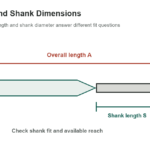
A drill larger than 1 inch is not defined by diameter alone. Screw-machine-length drills have a shorter overall body than jobber-length drills of the same nominal size, and shank diameter can differ from cutting diameter. This selected chart gives a quick dimensional comparison for eight fractional sizes. It is not a universal specification for every drill material, point style, tolerance class, or product series.
[gs_table id=”11326″]
What the dimensions describe
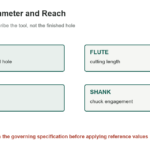
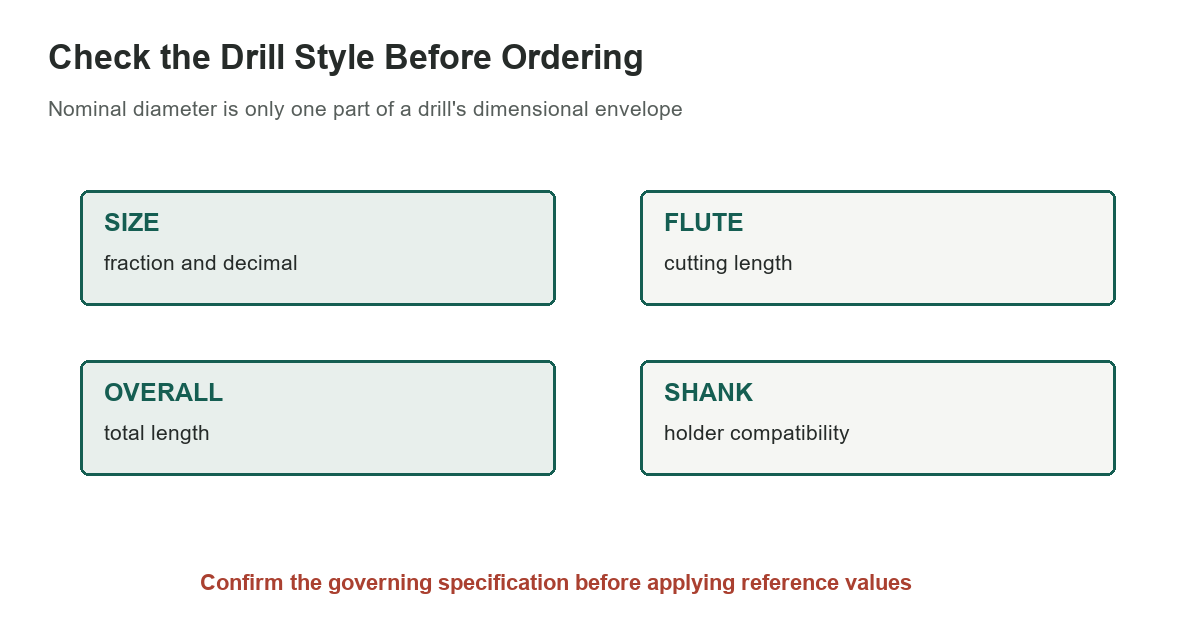
Nominal size is listed as a fraction, with decimal-inch and metric equivalents beside it. Flute length describes the fluted portion; overall length measures the drill from tip to the back end; and shank diameter is the portion held by a chuck, collet, or toolholder. The fractional rows here are the selected screw-machine-length entries, not every metric or decimal size printed in the original reference.
A shorter drill can improve rigidity by reducing overhang, but the name of the drill style does not guarantee suitability for a particular machine or hole depth. Compare the required reach with flute length, account for point length and the approach distance, and confirm that chips can clear for the chosen material and operation.
Read the table without mixing units
The source page presents inch and metric dimensions in adjacent columns. A displayed metric value may be rounded to the source’s precision and should not be treated as a separate tolerance. For example, the nominal 1 1/2-inch entry corresponds to 38.100 mm in the listed metric column; its flute and overall dimensions are separate measures, not cutting diameter.
Do not infer a fit just because two rounded numbers appear identical. Tool catalogs may specify tolerances, shank styles, neck relief, web geometry, point angle, and coating separately. When a holder’s capacity is close to the listed shank size, check the actual tool drawing and holder manufacturer’s limits.
Confirm the governing drill standard
ASME identifies B94.11M-1993 as covering nomenclature, definitions, sizes, and tolerances for high-speed-steel straight- and taper-shank drills, including inch and metric sizes. ASME says this edition remains in effect and is on stabilized maintenance. That scope is useful context, but the selected chart should not be mistaken for the full standard or proof that a current product conforms.
Specify the exact drill style and material when ordering. Carbide, cobalt, reduced-shank, taper-shank, long-series, and specialty drills may follow different dimensions. Supplier availability also varies; ASME explicitly notes that dimensional data in its standard do not imply that every listed product is a stock production size.
Choose a holder and process around the job
Before setup, match the shank to the chuck or collet, verify spindle capacity, and check total reach with the workpiece and fixture in place. A large drill may need a pilot hole or a machine with adequate torque and rigidity, but the correct approach depends on the toolmaker’s recommendations and material. Use the drill manufacturer’s speed, feed, coolant, and peck guidance rather than deriving cutting conditions from a length chart.
The site’s benchtop drill-press guide discusses machine selection, and the tap-drill chart covers a different hole-preparation task. For point geometry, see the drill-point length chart; it does not replace this shank and overall-length lookup.
Inspect the actual tool
Measure critical dimensions when fit or reach is important, especially on used tools or inventory without clear packaging. Check for a damaged shank, bent body, chipped cutting edge, or excessive runout. A nominal fractional diameter does not confirm that a worn or resharpened drill will make a hole to size.
Use appropriate eye protection and secure the workpiece before drilling. Keep hands away from rotating tools, remove chips with the machine stopped, and follow the machine and tool instructions. For precision, deep, or high-consequence holes, confirm the complete tool specification and process with the supplier or a qualified machinist.
Sources: ASME B94.11M-1993 Twist Drills, Original handbook dimensional table, GarageSanctum drill-point length chart