“Ceramic” covers materials with very different compositions, fabrication routes and properties. This compact comparison uses two named manufacturer grades: Corning MACOR machinable glass-ceramic and CoorsTek AD-96 alumina. The values are useful for screening a material data sheet, not for approving a part or treating unlike test results as directly comparable. For other shop-material references, see our workshop guide, bolt measurement chart, and bench-vise guide.
Selected data for two named grades
Density, expansion and flexural-strength figures below come from each supplier’s published product information. The expansion intervals and strength test descriptions are not identical, so the rows should not be read as a controlled head-to-head test.
[gs_table id=”10925″]
What the comparison can tell you
MACOR is a mica glass-ceramic marketed for machining with conventional metalworking tools. Corning’s product information describes zero porosity and no post-firing requirement, and its data sheet gives a minimum-average flexural strength value. Those product characteristics can make MACOR worth considering for a prototype or a precision insulating component where machinability is important.
AD-96 is a named alumina grade. CoorsTek lists its density, coefficient of thermal expansion and four-point modulus-of-rupture (MOR) data. The high flexural-strength figure is tied to a specified test method; it is not a guaranteed allowable stress for a finished component. Actual performance depends on geometry, surface condition, flaw population, loading direction, environment and the supplier’s quality controls.
Do not compare unlike test values as a design ranking
The table intentionally preserves each supplier’s temperature interval and test wording. MACOR’s cited expansion is reported from 25 to 300 C, while AD-96’s value is reported from 25 to 1000 C. A coefficient averaged across a wider temperature interval cannot be assumed identical to an instantaneous value or to a measurement over a narrower interval.
The flexural-strength entries also have different reporting language and test details. “Specified minimum average” and a four-point MOR value describe test results under stated conditions; neither is a design allowable. Ceramic strength is sensitive to surface finish, edge damage, component size, loading configuration and statistical variability. Do not use these two entries to claim that one grade will carry a particular force or safety factor.
Check the real application
Before choosing a grade, define the maximum and minimum service temperatures, thermal gradients, chemical exposure, electrical requirements, dimensional tolerance, mounting method and expected shock or vibration. Check how the supplier defines thermal expansion, thermal conductivity, dielectric behavior and strength, and request the current controlled specification for the exact stock form and grade.
Machinability is not the same as toughness. A machinable glass-ceramic may simplify fabrication but still require support against impact and point loading. Dense alumina may suit a different wear, insulation or temperature requirement but can be difficult to machine after firing. Use supplier guidance for cutting, grinding, edge preparation and handling; avoid dry processes that generate uncontrolled respirable dust.
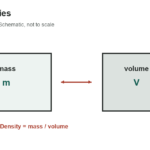
Compare data only when the property definitions align. Density is a mass-per-volume value, while thermal expansion describes length change over a stated temperature interval. Flexural strength measures behavior in a particular specimen and loading test; it is not tensile strength, compressive strength or a permissible design stress. The listed MACOR and AD-96 entries therefore help narrow a datasheet search but cannot replace geometry-specific analysis.
For a safety-critical or high-temperature design, have a qualified materials or design engineer review the exact grade, part geometry, production process and test basis. This reference narrows a broad property chart to two traceable manufacturer grades. It does not replace a current datasheet, lot certification, component testing or engineering analysis.
Sources
See Corning’s MACOR product brochure and CoorsTek’s Advanced Alumina data sheet. Confirm the exact grade, revision and test method with the supplier.