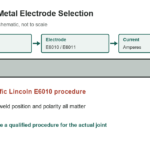
Electrode diameter is a practical starting point for selecting current, but the correct setting also depends on the exact consumable, joint, position, machine and qualified welding procedure. Lincoln lists these output ranges for its Fleetweld 5P+ E6010 product. They are not a universal chart for every E6010 electrode. For related workshop references, see our sheet-metal thickness chart, workshop planning guide, and bench-vise guide.
Fleetweld 5P+ output range
Each row pairs the listed electrode diameter and length with Lincoln’s stated output range. The manufacturer identifies this product as AWS A5.1 E6010 and specifies DC-positive current. Confirm the product label and the latest manufacturer document before using the figures.
[gs_table id=”10921″]
Why diameter does not set the whole procedure
The current range is a manufacturer guideline, not a complete welding procedure specification (WPS). Joint design, root opening, material grade and thickness, position, travel direction, polarity, fit-up, electrode condition, machine characteristics and operator technique all affect the result. A range printed for one electrode product should not be transferred to a different brand or electrode classification without checking that product’s data.
Lincoln describes Fleetweld 5P+ as a DC-positive E6010 electrode for all positions. Those product attributes help identify the applicable listing; they do not qualify a weld for a particular structure or service. A code-governed or safety-critical joint requires the applicable WPS, welder qualification and inspection requirements.
Set up and verify safely
Use a welding power source, leads, work clamp and electrode holder rated for the process. Check polarity at the machine and inspect the cables and connections before striking an arc. Keep the work area clear of combustibles, provide suitable ventilation and use the required eye, face, hand and body protection. Follow the electrode safety data sheet and site hot-work rules.
Electrode diameter also affects deposition and access to a joint, so a larger rod is not automatically the better choice. The root opening, edge preparation and desired bead size must suit the approved procedure. Check that the power source can maintain a stable arc at the selected setting and that the work clamp is attached to clean metal. Avoid using a current range as a substitute for verifying the electrode’s classification or condition.
Welding hazards extend beyond the electrical arc. OSHA’s construction standard describes ventilation and eye-protection requirements for the covered work conditions, including additional controls for confined spaces and certain metals. Employers and workers must follow the requirements that apply to their jurisdiction, workplace and hazard assessment; a shop fan alone should not be assumed to control fume exposure.
For a noncritical practice bead, start within the exact product’s stated range and adjust only in a controlled way while observing arc stability, bead shape, slag behavior and penetration. If the electrode sticks, the arc is excessively harsh, the work overheats or the bead is unacceptable, stop and review the setup rather than assuming a different current alone will solve the issue.
Do not use this reference to weld lifting equipment, vehicle structures, pressure piping, fuel tanks, building components or other regulated or load-bearing work. Those applications require the correct materials, design, approved welding procedures, qualified personnel and inspection. A visually neat bead does not prove strength or code compliance.
Keep the product and procedure matched
Record the electrode manufacturer and product name, classification, diameter, current type, polarity and selected setting alongside the WPS or practice notes. Check the lot packaging and storage instructions, and discard electrodes that are damaged or contaminated. Lincoln cautions that actual test results vary with procedure, plate chemistry and temperature, weldment design and fabrication method; suitability should be confirmed by qualification testing or another appropriate means.
These selected values are intended as a lookup aid for identifying one manufacturer’s published output ranges. They do not replace Lincoln’s current product sheet, a WPS, code requirements or the judgment of a qualified welding professional.
Sources
Lincoln Electric’s Fleetweld 5P+ data sheet identifies the classification, current type, positions and output ranges and cautions that actual weld results vary by application.