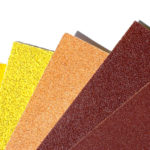
Choose an abrasive belt by work material, operation, finish target, contact surface and machine. “Coarse” or “fine” alone is not enough: abrasive grain, backing flexibility, coating and belt construction affect cut rate, heat and service life. The examples below come from current manufacturer product information and are starting points for a specific product family, not universal prescriptions.
Selected belt examples
These examples show how manufacturers describe belt choices for different metalworking tasks. Product grades are not a common performance scale across brands, and availability can vary by width, length and backing weight.
| Stainless, stock removal | Ceramic/alumina blend | P50 | 3M 777F; grinding aid and heavy backing |
|---|---|---|---|
| Carbon or stainless, intermediate | Aluminum oxide | P100 | Norton Metalite AO; moderate pressure |
| Aluminum or soft metals, light finish | Aluminum oxide | P80 | 3M 302D; flexible open-coat belt |
| Stainless, fine finishing | PSG ceramic + aluminum oxide | 150+ | 3M 723D; finishing/polishing use |
4 rows
Scroll horizontally to view all columns.
For stainless-steel stock removal, 3M lists its 777F belt with a ceramic/aluminum-oxide grain blend and a grinding aid intended to reduce heat. For moderate intermediate work on stainless or carbon steel, Norton’s Metalite aluminum-oxide file belt includes a P100 option. A 3M 302D open-coat aluminum-oxide belt includes P80 grades and is designed for light grinding, finishing and deburring on metals including aluminum and stainless.
Match grain and backing to the task
Ceramic grains are often selected for high-pressure metal removal; aluminum oxide is common in general-purpose belts. Open-coat and flexible backings may help on contours or soft metals, while stiffer backings support heavier pressure on a backstand. A nonwoven surface-conditioning belt is a different product from a coated-grain belt and is often selected for blending or deburring rather than establishing a precise dimensional cut.
The finish target determines how far to refine the abrasive. Begin with the least aggressive belt that removes the required material at a productive rate, then test the scratch pattern before moving to a finer grade. Changing grain, pressure, contact-wheel hardness or belt speed can alter the result even when grit marking stays the same.
Do not reuse historical speed settings
Older selection tables may list belt speeds by material and operation. Treat those numbers as historical references, not current machine settings. Norton explains that results depend on machine condition, horsepower, belt speed, grinding pressure, contact wheel, material and coolant. Use the current belt and machine maker’s specified operating range for the exact equipment and process.
Never exceed the maximum operating speed marked for a contact wheel or machine component. Before mounting a belt, inspect it for cuts, creases or damage, verify wheel condition and tracking, and keep guards in place. Follow the maker’s run-in procedure with people clear of the belt path. Use effective dust extraction and eye, face, hearing and respiratory protection appropriate to the material being ground.
Run a controlled test
For a repeatable comparison, use representative workpieces and record the belt product, grit, machine speed, pressure, contact wheel, wet/dry process, finish and removal rate. Inspect both the part and the used belt for loading, glazing, edge wear and heat discoloration. If a belt change improves one result but harms finish or belt life, adjust one factor at a time rather than switching several variables at once.
Keep belt tracking centered and stop the machine if the belt wanders, vibrates or develops a damaged edge. A narrow belt can heat a small contact area quickly, especially on stainless steel or thin stock. Use light, steady passes and allow the abrasive to cut; excessive pressure can increase heat and shorten belt life without improving the finish.
Combustible metals, coatings and mixed-material dust can require additional controls. Follow the work material supplier’s handling instructions and the machine’s fire and extraction requirements. A product chart cannot replace a task-specific hazard assessment.
- Identify the base metal and required operation.
- Choose grain, grade and backing as a matched product.
- Set speed from current machine and belt instructions.
- Keep guards, tracking and dust collection in working order.
- Test on sample stock and record the result.
For related equipment, compare the table-saw guide, review bench-vise options, and browse the reference chart library.
References
Check current product details for 3M 777F and 3M 302D, and the 3M 723D product data sheet. Also review Norton’s belt-speed technical information and coated belt safety guidance.