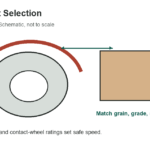
A contact wheel supports the abrasive belt at the work zone. Its hardness, diameter, face pattern, and contact patch affect how the belt engages the part. The same belt can cut more aggressively on one wheel and leave a smoother contour on another, so wheel choice should follow the required removal rate, shape, and finish rather than a single hardness label.
Start with the required finish
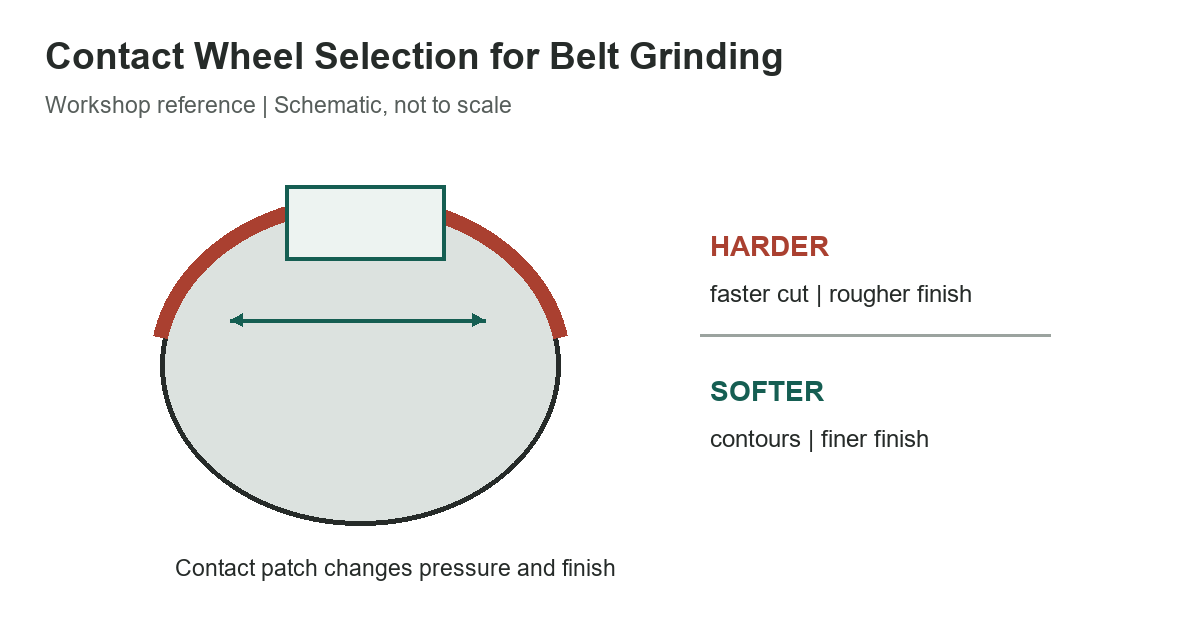
A harder contact wheel generally increases cut rate and produces a rougher finish. It can provide a consistent, firm backing for removing weld projections or working a relatively flat surface. A softer wheel compresses more, follows contours more readily, and can produce a finer finish, although it usually removes material more slowly.
The table summarizes practical starting relationships in Norton’s technical guidance. These are not universal performance guarantees; belt construction, abrasive grade, machine power, pressure, and material all change the result.
| Harder face | Higher cut; rougher finish | Flat stock and faster removal |
|---|---|---|
| Softer face | Lower cut; follows contours | Finishing shaped work |
| Serrated face | Acts harder; smaller contact | Small contact areas |
| Larger diameter | Acts softer | Larger work surfaces |
4 rows
Scroll horizontally to view all columns.
Read the face pattern and diameter together
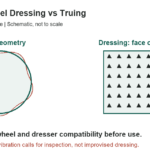
Serrations reduce the area of contact between the belt and wheel. Norton describes serrated wheels as acting harder, so they are commonly considered for smaller work surfaces. A larger wheel tends to act softer and can support a larger surface. The geometry of the lands, serration angle, and actual contact patch matter more than the word “serrated” alone.
Wheel-face patterns also shape the belt and part contact. A cog-tooth or coarse pattern is intended for aggressive work on projections; a plain face can give more controlled abrasive penetration; flexible and soft faces can help blend or polish contours. Treat old pattern names as a vocabulary for comparing products, not as a current universal catalog.
Hardness numbers also depend on the scale and material being tested. A durometer reading for rubber is not directly comparable with a hardness value for steel or another elastomer scale. Ask for the wheel maker’s own specification and contact pattern rather than translating an old number into a supposedly equivalent modern product.
Match the wheel to the belt and machine
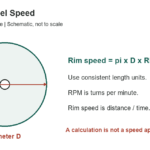
Before ordering, confirm the grinder’s wheel diameter, width, bore, speed rating, mounting, and guard clearance. Check that the wheel is approved for the belt machine and intended process. A contact wheel’s rated speed and construction must be compatible with the spindle; do not infer a safe operating limit from its hardness or appearance.
For contour grinding, make a test pass on representative stock and check both removal and scratch pattern. If the wheel digs in or leaves facets, reduce pressure or try a more conformable face. If it barely cuts and the finish is unnecessarily fine, a firmer wheel or a different face pattern may be appropriate. Change one factor at a time so the result is interpretable.
Keep belt speed, belt grade, and applied pressure constant while comparing wheel candidates. Record cut time, finish, heat, belt-joint behavior, and wheel wear. Wheel diameter and condition can change the effective contact patch, so inspect runout and face wear before blaming the belt specification for inconsistent results.
Inspect before use
Stop if a wheel is cracked, loose, out of round, or has damaged segments. Keep the belt centered and the machine guard in place. Follow the grinder and wheel-maker instructions for installation, tracking, speed, and personal protection. The contact wheel is only one element of a belt-grinding system; belt safety and machine controls remain essential.
- Choose cut rate and finish before choosing hardness.
- Consider contact patch, serration, and wheel diameter.
- Check belt compatibility, mounting, guard, and speed rating.
- Test on matching material and inspect the scratch pattern.
- Follow the machine and wheel manufacturer’s safety instructions.
Compare shop-floor coating choices, see the abrasive grit conversion chart, and review the abrasive-belt selection guide.
References
See Norton’s contact-wheel technical section and its contour-grinding guidance for product-specific selection details.