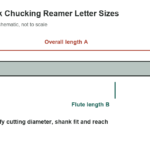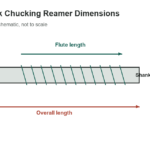
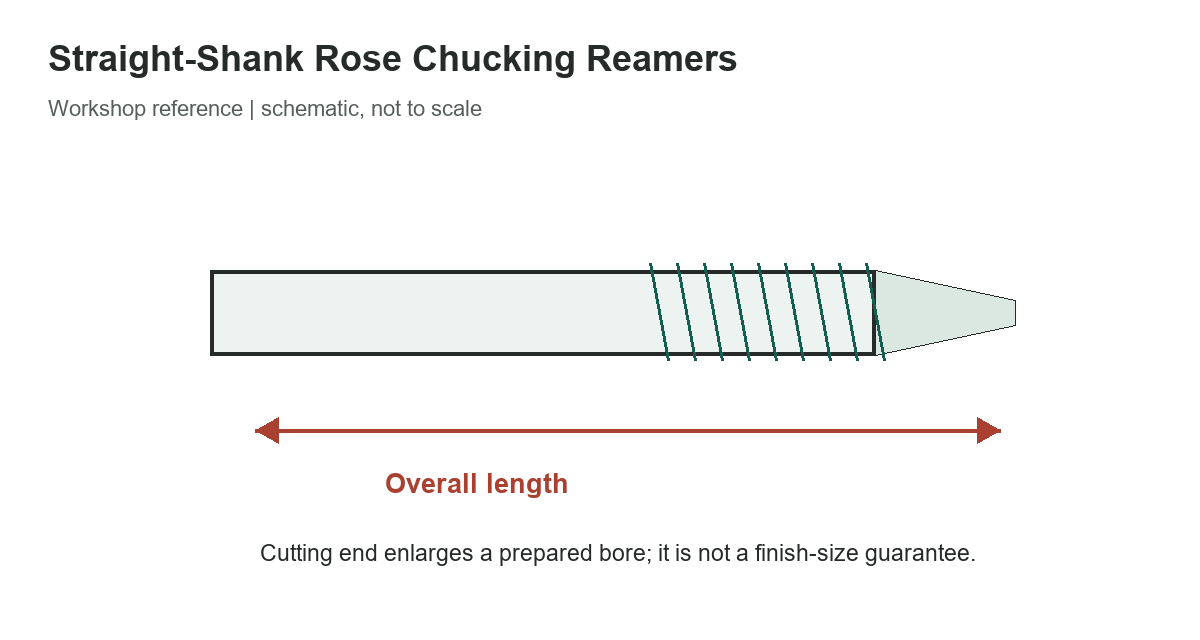
A rose chucking reamer is a machine-held cutting tool for enlarging a prepared hole when the process allows a rougher cut before a separate finishing operation. Its name, nominal cutting diameter and shank diameter are different measurements. The selected fractional sizes below show representative overall length, flute length, and shank diameter limits; they are not a complete catalog or a guaranteed finished-hole size.
Selected fractional dimensions
Read the shank entry as maximum to minimum diameter. The nominal rose size refers to the cutting end, while the shank must match the holder. Overall length and flute length describe different portions of the tool. Check the actual tool marking and manufacturer’s drawing before ordering, especially when replacing a worn or modified reamer.
[gs_table id=”10950″]
Understand the tool’s role
Rose reamers cut primarily at the end bevel. They are commonly used where the operation removes more stock than a finishing reamer should take, but the result may not provide the final size or surface finish required by a precision fit. Plan any follow-up finishing tool, allowance, alignment and inspection method from the applicable process instructions. Do not use the nominal rose diameter alone to set the final bore dimension.
Hole quality depends on the starting bore, machine runout, holder alignment, work material, cutting edge condition, lubrication, feed and chip evacuation. A badly positioned or undersized starting hole can make the tool cut unevenly, wander, chatter or overload. Check the workholding and bore axis before starting. Use the cutting data for the specific reamer material and workpiece rather than borrowing speed and feed values from a different tool geometry.
Choose the holder and prepare the bore
Compare the maximum and minimum shank diameter with the holder’s actual capacity and the required concentricity. A holder that closes on the shank is not automatically accurate enough for the desired bore. Clean the shank and collet or chuck, inspect for damage, and minimize overhang where the setup permits. Confirm that the workpiece is secure and the spindle axis is aligned with the hole.
Determine how much stock remains before choosing a rose reamer. The planned allowance must suit the tool’s geometry and the material; a reamer is not a substitute for drilling or boring a grossly undersized hole. If the application requires a close tolerance, specify the final bore, tolerance, surface finish and inspection method separately. The finishing process may need a different reamer, honing operation or boring pass.
Check the standard and toolmaker data
ASME B94.2 covers reamer nomenclature, types, sizes and tolerances and remains the reference for the applicable American fractional series. ISO 521 describes machine chucking reamers with cylindrical or Morse-taper shanks, but its scope is not identical to every rose-chucking configuration. Identify which standard and tool type the drawing calls out before comparing catalog dimensions.
Catalogs can differ in material, flute style, tolerance, chamfer, helix, length and available nominal sizes. Some sizes in a family may be ordinary chucking reamers rather than rose chucking versions. Check the exact type column and flute note, not only the row’s diameter. For more drilling and holemaking context, see our benchtop drill press guide, bench vise guide, and drill point length chart.
Before cutting, confirm the bore is clean and free of chips, scale and burrs that could score the tool. Establish the starting hole size from the toolmaker’s recommended allowance for the work material and reamer diameter. Secure the part against rotation, use the correct cutting fluid when required, and feed the tool steadily rather than dwelling at the hole bottom. Stop if the tool chatters or binds.
Inspect the completed bore with the gauge and method required by the drawing. A plug gauge, bore gauge or other suitable instrument may be needed to verify size, roundness and finish; a caliper at the mouth of the hole may not reveal taper or a bell-mouthed entrance. Record the tool identification and result when the hole has a controlled fit function.
These selected dimensions are a lookup aid, not an acceptance inspection or a process qualification. Verify the current standard edition, reamer drawing, material grade and machine setup for the work at hand. A tool dimension does not establish the finished hole size, strength of the part, or suitability for a safety-critical repair.
Sources
ASME’s B94.2 Reamers listing confirms the standard’s scope and current reaffirmed designation. ISO 521:2011 separately describes cylindrical- and Morse-taper-shank machine chucking reamers.