Metalworking fluid classes describe broad formulation families, not a guaranteed performance ranking. A straight oil is used neat; soluble oils, semisynthetics and synthetics are water-miscible products supplied for dilution according to their maker’s instructions. The comparison below helps narrow a conversation with a fluid supplier, but the exact machine, material and cutting operation still determine the choice. For related shop references, see our cutting-torch tip chart, bandsaw guide, and bench-vise guide.
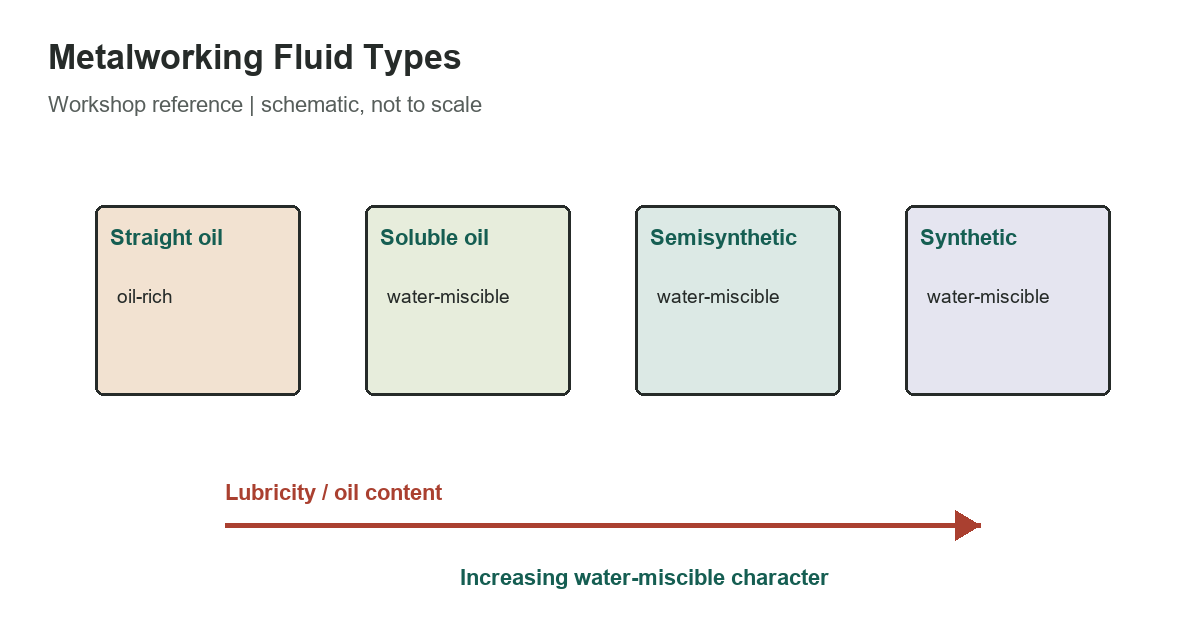
How the four broad classes differ
The categories below follow OSHA’s overview of metal-removal fluids. They distinguish base formulation and general characteristics only. They do not specify a mixing ratio, product approval or safe exposure limit.
[gs_table id=”10871″]
Straight oils are commonly selected when lubrication is central, such as operations with high metal-to-metal contact or machines designed for neat oil. Since they are not diluted with water in normal use, they have different spill, mist and fire considerations from water-miscible fluids. A product’s label and safety data sheet, not its class name, identify its hazards and required controls.
Soluble oils are concentrates with emulsifiers that disperse oil in water. Their oil content can support lubrication, while the water phase provides cooling. Actual stability, corrosion control, cleanliness and sump life differ across formulations and depend on make-up water, contamination and maintenance. A milky appearance is common for many conventional soluble oils but should not be treated as a universal product test.
Semisynthetics also use water, but generally contain less base oil than soluble-oil concentrates and combine soluble and emulsifiable components. Synthetics are formulated without petroleum oil and are designed to be diluted in water. The names do not guarantee that a fluid is oil-free in every other sense, non-irritating, compatible with every alloy, or suitable for any machining process; check its technical and safety documents.
Choose by process and machine
Start with the operation: turning, milling, drilling, grinding and forming can place different demands on lubrication, heat removal, chip flushing and surface finish. Identify the workpiece alloy, tool material and coating, speed, feed, depth of cut, coolant delivery, and whether the system is flood, through-tool or minimum-quantity lubrication. A harder-to-machine alloy or severe contact may call for different lubricity than a high-speed operation where heat removal dominates.
Then check what the machine builder permits. Pumps, seals, coatings, filtration and mist collection may constrain the fluid choice. Existing sump chemistry matters too: changing classes or mixing incompatible products can destabilize a fluid or interfere with corrosion protection. Before conversion, ask the supplier about compatibility, cleaning, water quality, concentration measurement and waste handling.
For water-miscible fluids, follow the manufacturer’s order of addition and concentration guidance. Do not copy a generic dilution recipe from an unrelated fluid. Monitor the sump using the product supplier’s method, keep tramp oil and chips under control, and follow workplace procedures for mist control, hygiene and fluid disposal. OSHA notes that its manual is advisory; it does not replace applicable regulations or the product’s safety data sheet.
What the class name cannot tell you
A class label cannot establish tool life, finish, corrosion protection, worker exposure, bacterial stability or total operating cost by itself. Those depend on formulation and conditions. Ask for a product trial with documented process settings and measurable acceptance criteria. Compare parts per tool, surface quality, rejected work, fluid consumption, maintenance time and disposal cost rather than choosing solely from color, smell or an assumption that one class is always cleaner.
Keep the selection review tied to a named product and operation. Record concentration range, water requirements, material restrictions, filtration needs and supplier support. Revisit the choice when the alloy, tooling, cycle or machine changes. This class overview is a starting point for that review, not a substitute for the current technical data sheet or a qualified workplace assessment.
Sources
OSHA and NIOSH describe the broad metalworking-fluid classes and the factors that affect their use. Product-specific selection should use the current supplier documentation and machine requirements.