Cylindrical grinding data only make sense when the operation and units are clear. Traverse grinding moves the wheel across the work; plunge grinding feeds into the work without the same traverse pattern. The selected historical data below include both operations, so infeed values use different bases. The source describes these figures as conservative averages, not guaranteed safe or optimal settings for a modern machine.
[gs_table id=”11334″]
Separate traverse from plunge
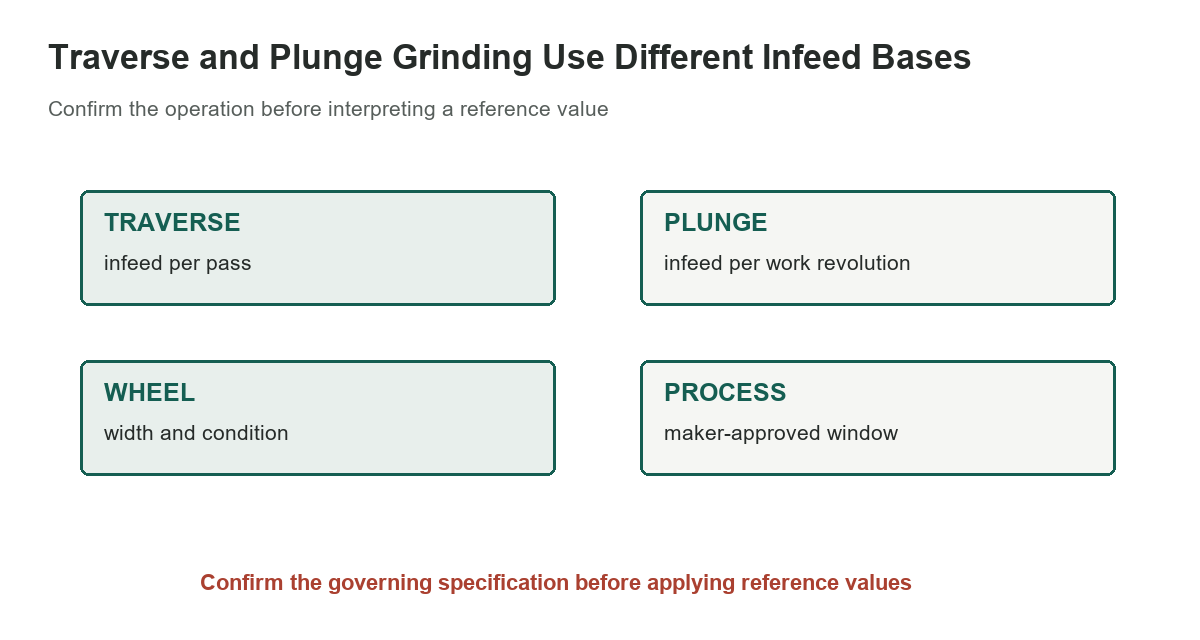
The traverse entries pair work-surface speed with infeed per pass and a traverse amount expressed as a fraction of wheel width for each work revolution. The plunge entries instead give roughing and finishing infeed per work revolution and do not state a work-surface speed in this portion of the table. Compare only like operations; a per-pass value cannot be read as a per-revolution value.
The selected values preserve ranges and maximum labels from the source, including finish-infeed ranges for hardened steels and maximum notes for some materials. Metric equivalents are shown alongside inch values. Rounding in the source may make converted values appear slightly different from a fresh conversion; retain the source’s stated precision.
Treat the figures as historical context
A grinding condition depends on the wheel specification and diameter, wheel speed, work speed, contact geometry, dressing state, coolant delivery, stock allowance, machine rigidity, and the finish or tolerance required. A number detached from those variables is not a complete process recipe. The source itself describes the table as conservative average data and notes that some entries were derived.
Current grinding-wheel and machine manufacturers publish their own operating guidance and limits. Use those documents for wheel speed, mounting, dressing, coolant, and infeed. Never exceed the wheel’s marked maximum speed, and do not assume an older handbook value overrides a current wheel or machine limit.
Match the material condition
Rows distinguish annealed and hardened plain-carbon, alloy, and tool steels, along with copper and aluminum alloys. Those labels are broad. Actual hardness, alloy, heat treatment, geometry, residual stress, and stock condition can change grinding behavior. If a workpiece does not fit a listed category, the table does not supply a validated interpolation method.
Grinding can produce heat and damage even when a nominal speed looks modest. Watch for burn, discoloration, chatter, loading, poor surface finish, and dimensional drift. Inspect the part using the drawing’s required method, and stop to diagnose the process rather than compensating blindly with more infeed or a different traverse fraction.
Distinguish this chart from side-feed calculations
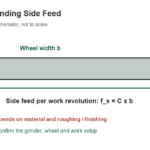
Traverse fraction expresses wheel movement relative to wheel width per work revolution. It is related to side feed, but the values here are a material-and-operation reference rather than a calculation for a particular wheel. The separate cylindrical grinding side-feed guide shows how to calculate traverse side-feed examples; use that method only when its assumptions match the setup.
For broader process context, see drill-press selection, which concerns machine rigidity rather than grinding, and the garage painting guide, which is unrelated to abrasive process parameters. Norton and OpenLearn provide additional grinding education, but machine-specific instructions still control.
Build a controlled setup
Start from the grinding machine and wheel instructions, then confirm workholding, wheel dressing, speed, coolant, and the required result. Make a small, controlled trial on representative stock, inspect the work, and document settings only after confirming the result. If a part is safety-critical, has a thin section, or has a tight surface-integrity requirement, involve a qualified grinding specialist.
Keep guards in place, use the specified personal protective equipment, and inspect the wheel before mounting. Balance and dress only as instructed, secure the work, and keep people clear of the wheel plane during startup. This reference table cannot replace shop training, a risk assessment, or the machine’s operating procedure.
Sources: Norton: grinding considerations for surface finish, OpenLearn: grinding processes, Original handbook Table 3, visually reviewed