Metal surface preparation for a coating is more than choosing a cleaner. TT-C-490J, the current revision shown as active in the Defense Logistics Agency Qualified Products Database, lists eight surface-cleaning method categories. The selected chart summarizes those categories for orientation. It does not tell a reader which method to use on a specific part, and it intentionally excludes chemical concentrations, temperatures, dwell times, and other process recipes.
[gs_table id=”11338″]
Start with the current contract documents
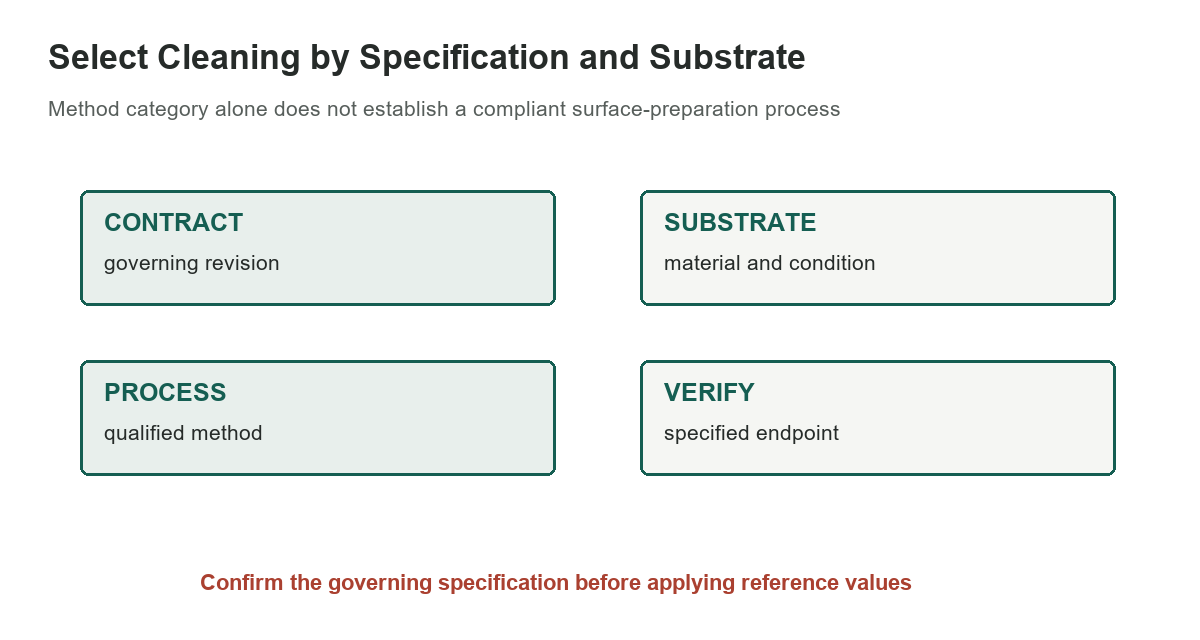
TT-C-490J covers chemical conversion coatings and pretreatments for metallic substrates as a base for organic coatings. Its method list is part of a controlled specification. A drawing, contract, technical data package, coating manufacturer’s instructions, or qualified process may narrow the choices or impose additional inspection requirements. The active DLA QPD listing is useful for checking revision status, but the controlled contract copy governs the job.
Older handbook references to TT-C-490 can describe a superseded revision. Method names and sequence details can change, so confirm the revision cited in the contract and do not treat a historical chart as a current instruction.
Understand the eight method categories
Method I covers mechanical or abrasive cleaning, sanding, or grinding under applicable AMPP/SSPC standards. Method II is solvent cleaning; III is detergent cleaning; IV is emulsion cleaning; V is chemical deoxidizing; VI is a phosphoric-acid cleaner; VII is steam cleaning; and VIII is laser cleaning. The specification describes broad categories and related conditions, not a one-size-fits-all operating recipe.
Several methods can require additional cleaning, rinsing, testing, or process controls. For example, TT-C-490J describes pre-cleaning and inspection conditions for Method I and warns that Method VIII laser cleaning may affect critical substrate properties, including fatigue. Read the actual clauses and notes before planning work; this brief lookup is not the complete standard.
Choose for substrate and coating system
A method that works for one alloy, contamination, or coating system may harm another. Compatibility includes the base metal, existing coatings or sealants that must remain, part geometry, surface condition, and the next pretreatment step. Some chemical methods have restrictions for high-hardness ferrous material, while abrasive processes can alter profile or introduce contamination if media and equipment are unsuitable.
Do not select a method based only on convenience or a visual impression that the metal looks clean. Ask the coating supplier and process owner for the qualified procedure and required surface endpoint. Confirm the specific substrate class, pretreatment type, approved product, rinse or drying requirements, and any required test method.
Verify cleanliness and preserve process control
The specification ties cleaning to defined cleanliness criteria and verification. Depending on the method and application, water-break testing, visual standards, surface profile checks, cleanliness records, or other acceptance requirements may apply. The table does not encode every test, threshold, or exception. Record the chosen method, materials, equipment, operator, lot, and inspection results as required by the quality system and contract.
For hazardous chemicals, OSHA’s Hazard Communication Standard requires workplace access to safety data sheets for hazardous chemicals and appropriate employee information and training. Read the product SDS, use the specified protective equipment and ventilation, and follow the employer’s chemical-handling program. Never mix chemicals or improvise a cleaning bath from this overview.
Keep surface cleaning separate from conversion coating
Cleaning removes soil or prepares the surface; conversion coating is a separate treatment step with its own type, material, and acceptance requirements. TT-C-490J lists conversion-coating and pretreatment types separately from its cleaning methods. A cleaning-method label does not identify the phosphate coating type or its coating weight, and the table provides no film-thickness values.
The site’s garage-floor coating guide, coating cost overview, and garage-door paint guide discuss consumer coating projects, not TT-C-490J compliance. For industrial work, follow the current controlled specification and qualified supplier procedure.
Sources: ASSIST document record for TT-C-490J, section 1.2.1, DLA Qualified Products Database: active TT-C-490J, OSHA Hazard Communication Standard, 29 CFR 1910.1200, Earlier handbook cleaning-method chart (historical revision)