A grinding wheel’s face profile describes the cross-section of its working edge. It is not the same as a wheel’s body type, its abrasive specification, or its maximum-speed rating. The selected letter profiles below come from the face-shape figure in ANSI B74.2-2003. They are useful when reading a drawing or matching a dressed profile, but they are not a substitute for the wheel manufacturer’s current product specification.
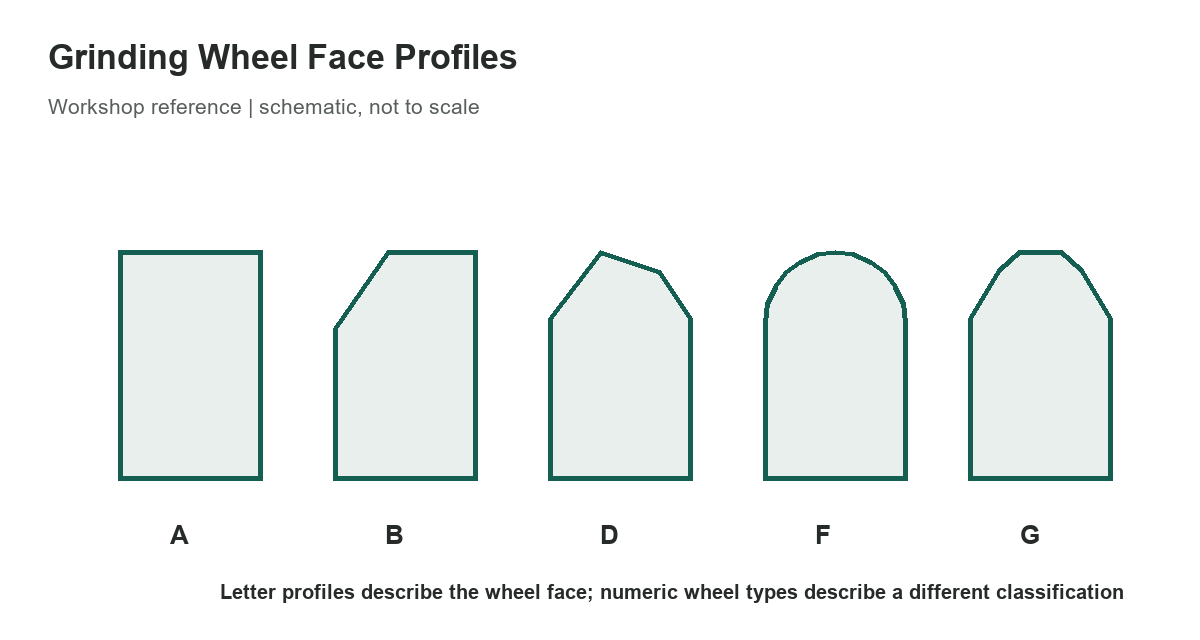
Compare selected face profiles
In the table, T means wheel thickness and R is the illustrated face radius. The selected profiles include a flat face, bevels, rounded shoulders, and crowns. The letter identifies a geometry in that reference; it does not by itself specify the wheel’s diameter, bore, abrasive, bond, operating speed, or approved application.
[gs_table id=”11122″]
Do not mix face profiles with wheel types
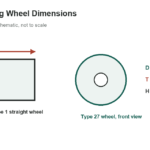
Catalogs also use numeric wheel types for the wheel’s overall construction, such as straight, recessed, cup, or depressed-center designs. A face-profile letter and a numeric body type answer different questions. Product catalogs may use additional shape codes, dimension conventions, or combinations, so confirm the exact drawing and ordering code instead of assuming that a letter has the same meaning across every manufacturer.
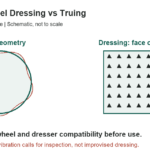
For example, a rounded profile may create a contour that a flat wheel cannot, but the profile alone does not prove that the wheel is suited to a particular material or operation. Abrasive grain, grade, bond, structure, wheel dimensions, machine capacity, work contact, and guarding all matter. A dressed profile also changes as the wheel wears and is dressed.
When comparing two similar-looking faces, inspect where the radius or bevel begins and how the drawing measures it. A rounded shoulder can be defined by a radius related to thickness, while a bevel may be specified by an angle and a short land. Those callouts are not interchangeable. If the workpiece requires a sharp corner, a radius, or a narrow relief, compare the finished contact line to the part drawing and include the dressing allowance. A sketch is helpful for identification, but the dimensioned profile controls the actual fit.
Do not infer that an ISO note, a familiar letter, or a profile’s appearance means the wheel is interchangeable with a different catalog item. Wheel manufacturers may offer only some profiles, use additional codes, or limit a shape to specific dimensions and bonds. Check the full product number and ask the supplier when the wheel is used in a precision or safety-critical operation. The numeric body shape and mounting geometry still need to match the machine.
Match the profile to the job drawing
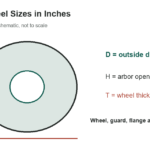
Start with the required workpiece contour and the machine’s approved wheel envelope. Compare the complete wheel section, not just its face: verify the diameter, thickness, hole, recesses, flange fit, and maximum operating speed on the product label. A drawing that calls for a particular radius or bevel should state the dimension and tolerance; the profile letter is only a shorthand for the reference outline.
These are selected examples, not all shapes in B74.2 and not current product availability. If a letter profile and a supplier’s numeric wheel type appear to conflict, use the supplier’s dimensioned drawing and ask the manufacturer. Never modify a wheel to create a profile unless the wheel manufacturer and machine instructions permit that operation.
Keep wheel safety separate from shape selection
A shape chart does not verify a wheel’s integrity or safe mounting. OSHA requires abrasive wheels to be inspected and ring-tested before mounting under the applicable rule, and wheel guards and flanges must match the wheel and machine. Follow the rules that apply to your workplace, the grinder manual, and the wheel manufacturer’s instructions. Do not install a wheel with a crack, unknown speed rating, damaged bore, or incompatible flange.
Related references include our grinding wheel size guide, metric wheel size examples, and wheel dressing and truing guide. Those pages cover dimensions and maintenance rather than face-profile definitions.
References
- UAMA lists B74.2-2003 as its standard for grinding-wheel shapes and sizes.
- Norton’s 2025 catalogue shows current numeric wheel-type examples and product dimensions.
- OSHA 1926.303 covers applicable abrasive-wheel inspection, guarding, and mounting requirements.