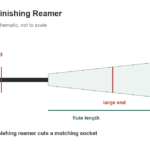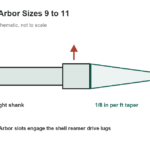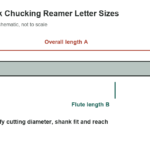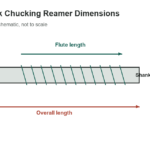
A Brown & Sharpe (B&S) taper socket reamer sizes a tapered socket to match the corresponding B&S taper. The taper number identifies the series; it is not a Morse taper number and does not specify the reamer’s overall length. The selected dimensions below describe current high-speed-steel socket reamers from supplier catalogs.
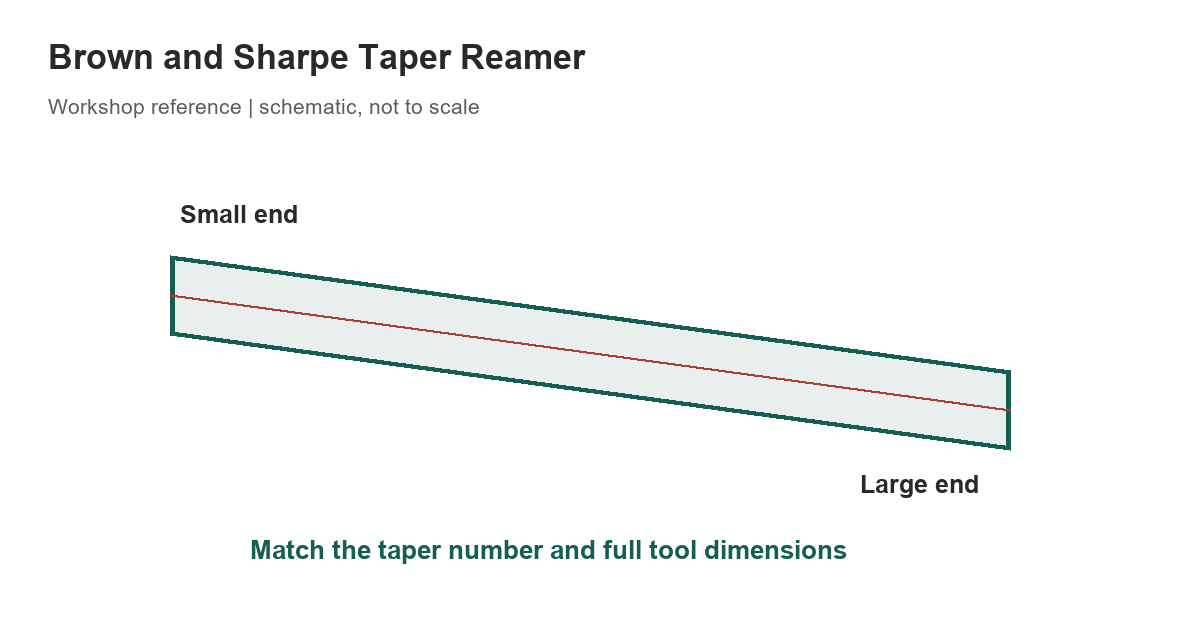
Selected B&S taper reamer dimensions
The first diameter is measured at the small end and the second at the large end. Overall length includes the shank. The table samples five sizes; confirm the exact taper number and the current manufacturer drawing before ordering or machining.
[gs_table id=”11155″]
Match the socket standard, not just the apparent angle
Brown & Sharpe tapers are self-holding machine tapers used on legacy machinery and tooling. Their nominal taper rate is close to, but not identical to, every other taper family. A part that looks similar may still have a different end diameter, taper length, or taper rate. Do not substitute a Morse, Jarno, Jacobs, or pipe taper because its outside diameter appears close.
The reamer is intended to finish a tapered socket, not to drill a straight hole to the large-end diameter. A correctly prepared pilot hole, alignment, cutting speed, lubrication, and chip removal matter. Follow the tool maker’s instructions and the workpiece drawing. Excessive feed or a misaligned workpiece can make a tapered reamer bind, oversize the socket, or break.
Before cutting, confirm that the existing bore is suitable for the selected reamer and that enough material remains for a clean finish. Keep the tool aligned with the spindle or work axis, advance it smoothly, and withdraw it as directed to clear chips. Do not rock the reamer to correct a misaligned setup; that can produce a bell-mouthed or out-of-round socket. Use the correct cutting fluid for the material and tool, and follow the machine and tooling instructions.
Catalog lengths and diameters are product dimensions, not a complete tolerance specification for the mating socket. The desired taper fit, engagement length, material, and application determine how the finished socket is verified. Use the specified gauge or mating master when fit is critical. A reamer number alone does not certify that a particular spindle, arbor, or chuck will seat correctly.
Inspect the finished taper over its intended contact length. A narrow ring of contact at the mouth or bottom can indicate an incorrect taper, an unsuitable gauge, or a machining issue; forcing the tool deeper is not a reliable correction. Where a tapered pin or matching component controls the fit, use that specified inspection method and maintain the required engagement and flushness.
Store the reamer clean and protected from impact. Nicks on the cutting edges or taper can mark the socket and make a fit appear tighter than it is. Check the tool before use and replace or service it when wear prevents a consistent finish.
Keep the tool’s identity separate from the machine’s spindle taper. A socket reamer can cut a B&S socket, but that does not mean the reamer itself has a B&S shank. Confirm the cutting taper and the mounting shank independently before setup.
Brown & Sharpe taper socket reamers are still sold in a range of sizes, but availability varies by supplier and construction. The current Alvord-Polk catalog lists high-speed-steel, square-shank, straight-flute examples and dimensions. Aircraft Spruce provides another supplier reference for several sizes. Treat the values here as selected catalog dimensions, not as a claim that every brand uses the same flute, shank, or overall length.
For other machining-taper references, see our taper-shank reamer guide, drill chuck mounting sizes, and Morse taper finishing reamer chart. Each describes a different taper or tool connection; identify the standard before choosing a tool.
References
- Alvord-Polk’s current B&S socket reamer catalog lists taper number and selected tool dimensions.
- Aircraft Spruce’s reamer catalog provides a separate supplier comparison.