Grinding-wheel dimensions are a compatibility check, not just a size label. Confirm the wheel’s outside diameter, thickness, arbor opening, wheel type and maximum speed against the machine, guard and mounting instructions. The examples below are selected Norton Metal A AO Type 27 products, not universal size ranges for all grinding wheels.
Selected inch-series product examples
The two 4 1/2-inch options differ in their arbor openings even though the diameter and thickness are the same. The 7-inch example has a lower listed maximum speed. Read each row as a specific product configuration and check the current package or manufacturer’s product record before buying; do not infer that a similar-looking wheel shares the same speed rating.
[gs_table id=”11030″]
Match the wheel to the machine
Start with the machine manual and guard: identify the permitted wheel type, diameter, thickness, arbor or spindle thread, flange arrangement and maximum speed. The wheel must be compatible with the complete mounting system, not only the hole diameter. Never enlarge the arbor hole, force a wheel onto a spindle or use improvised reducing bushings unless the manufacturer expressly provides that configuration.
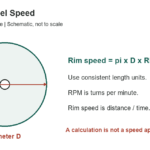
Maximum operating speed is a ceiling, not a recommended operating target. The machine’s actual spindle speed must not exceed the maximum printed on the wheel. A smaller wheel can turn faster than a larger one at the same surface speed, so don’t transfer an rpm value between diameters. Check the speed mark on the exact wheel and the rated speed of the grinder.
Do not swap wheel shapes casually
Type 27 wheels are depressed-center wheels intended for compatible angle-grinder operations. They are not interchangeable with straight bench-grinder wheels, cut-off wheels or other shapes simply because the diameter and opening appear to fit. The angle of use, contact area, side loading and guard design differ. Follow the wheel’s label for permitted operations and do not grind on a surface the maker does not authorize.
Before mounting, inspect the wheel for damage and verify that it is rated for the material and task. Use the correct flanges, blotters and wrenching method, then allow the guarded machine to reach operating speed before bringing the work into contact. Stand clear during startup and use the required eye, face and other personal protective equipment.
Measure and verify
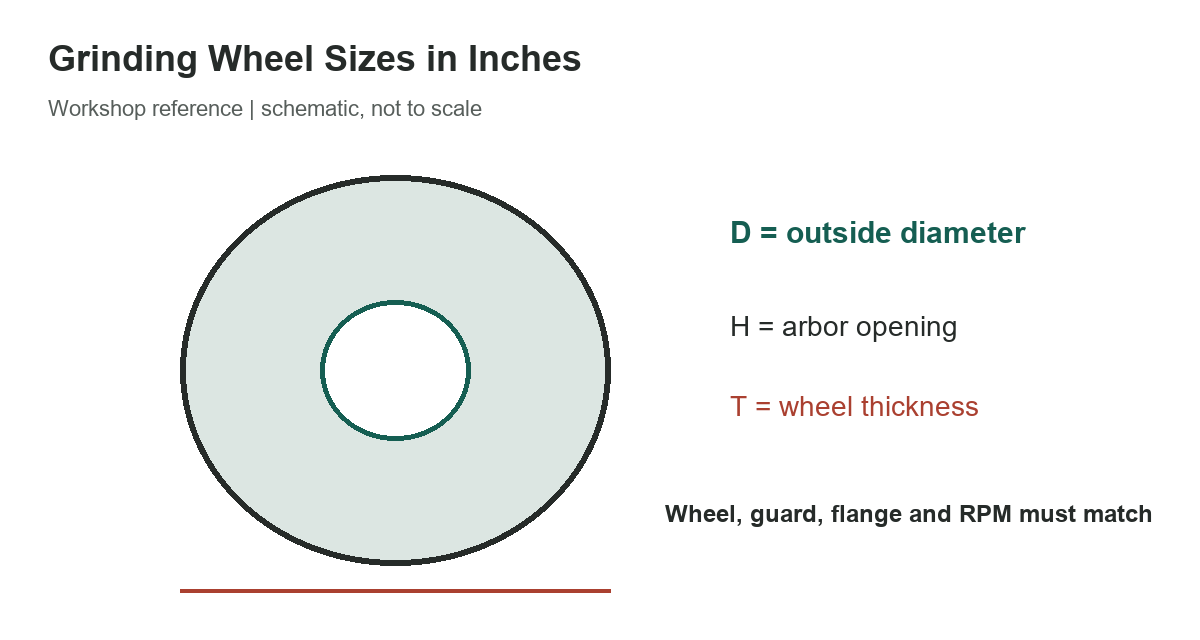
Diameter is the outside size; thickness describes the wheel body at its working section; the arbor opening is the central fit. The product name or abrasive type does not replace these measurements. If a wheel has worn down, its current diameter may differ from the new-wheel size, but its speed rating and remaining-life criteria still come from the manufacturer.
Do not assume a metric value is a direct substitute for an inch size. A nominal 4 1/2-inch dimension equals 114.3 mm mathematically, but that does not establish interchangeability, flange fit, guard clearance or product availability. Match the manufacturer’s exact dimensions and product code.
Use the chart as a model for reading a listing
Product tables may include several variants under one family name. Compare all dimensions on the same row and keep the corresponding maximum speed with that exact configuration. If one of the required values is missing or a product page conflicts with the physical label, stop and verify with the manufacturer rather than guessing.
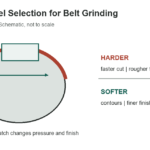
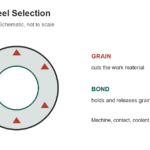
For other wheel operations, first identify the wheel shape and application, then review the abrasive, bond, grade and grit recommendation. Wheel selection and speed are related but separate decisions. The examples here only show how inch diameter, thickness, bore and speed appear together on a specific current product listing.
Related references: grinding-wheel speed calculations, abrasive and bond selection, and wheel dressing and truing.
Source and scope
All three rows are selected variants from the current Norton Metal A AO Type 27 product specifications. Norton’s current safety guidance covers matching wheel speed to the grinder and using the correct mounting and guard. These are not the full historic ANSI B74.2 size-range data on printed pages 1284–1288 of the handbook. Confirm the exact wheel label, grinder manual, guard and current manufacturer listing before use. Norton Type 27 product specifications; Norton angle-grinder safety guidance.