A shell reamer is a hollow machine reamer that mounts on a separate arbor. It can be economical for larger bores because one arbor may fit several cutter diameters. Keep the cutting diameter, tapered arbor hole and driving slots distinct when identifying a tool. The compact chart shows three selected inch sizes rather than a complete size listing.
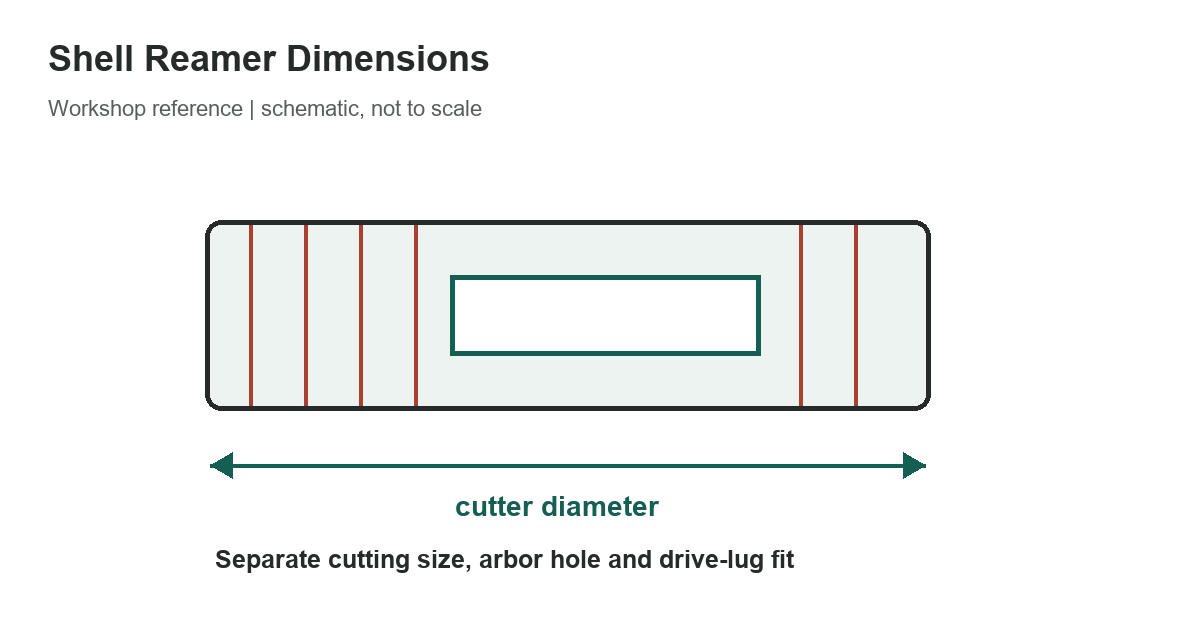
Selected diameters and mounting dimensions
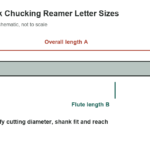
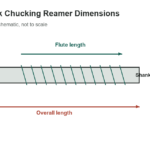
Use the nominal cutter diameter to identify the bore the tool is intended to finish. The large-end hole measurement helps identify the compatible arbor family, while the fitting-arbor number is a separate catalog designation. The overall length is not the flute length. Verify every dimension on the actual tool or current supplier drawing before ordering or setting up a machine.
[gs_table id=”11022″]
Check the arbor before the cut
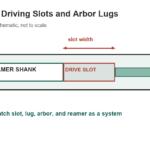
Shell reamers use a tapered mounting hole and drive features that engage lugs on the arbor. Do not assume that matching the hole’s large-end diameter alone proves compatibility. The taper, gauge length, slot location, lug dimensions and seating condition all need to match. A poor fit can produce runout, chatter, fretting, poor finish or damage to the cutter and arbor.
Clean both mating surfaces and inspect them for burrs, chips, corrosion and wear. Confirm that the reamer seats fully and the drive lugs engage without forcing the assembly. Follow the machine and tooling manufacturer’s tightening and retention instructions; do not improvise a spacer or modify the taper to make unlike components fit.
Straight or helical flutes?
Straight flutes are a common starting point for a continuous cut with stable chip flow. A helical flute changes how the cutting edges enter the work and can help in interrupted conditions, but helix hand, cutting direction, material and chip evacuation matter. The helical versions in the legacy source carry footnote qualifications, so do not assume every diameter is available in both geometries.
Choose the flute style from a current toolmaker recommendation for the workpiece and hole condition. Interrupted holes, keyways, cross holes, deep bores and gummy materials can change the best geometry. A spiral flute is not a universal cure for chatter or poor chip control. Check whether the tool is designed for the direction of rotation and how it will move chips.
Leave stock for reaming
A reamer follows a prepared hole; it is not normally used to remove the full drilling allowance. Start from the reamer manufacturer’s stock-allowance and cutting-data guidance for the exact material, diameter and edge condition. Too little stock can cause rubbing instead of cutting. Too much can overload the tool, produce oversized holes or shorten tool life.
Hold the work securely, align the spindle and bore, and keep runout low. Use the recommended coolant or lubricant and a feed that produces a stable chip. A reamer that is forced, reversed while engaged, or allowed to dwell can score the bore. Inspect the finished size with the specified gauge; nominal tool diameter alone does not certify a tolerance or surface finish.
Order by the complete tool identity
Record diameter, flute form, material, hole taper, arbor number, overall length and the manufacturer’s part number. Confirm availability and revision because the standards define dimensional scope but do not promise that every size remains a stock item. A reamer with the same nominal diameter can differ in tolerance, coating, cutting direction, flute geometry and intended work material.
Use this chart for screening and identification only. For a precision fit, safety-related component or production process, use the current drawing, applicable reamer standard and qualified process instructions. Inspect the bore after machining and document the actual measured result rather than relying on a catalog label.
Related references: shell-reamer drive slots and arbor lugs, rose chucking reamer dimensions, and reamer fit and selection.
Source and scope
The selected dimensions are from the shell-reamer entry in the 31st edition of Machinery’s Handbook, printed page 926. ASME lists B94.2-1995 as reaffirmed in 2025 and describes its scope as reamer nomenclature, types, sizes and tolerances. A current January 2024 ICS catalog provides a cross-check for representative inch sizes. Verify current product availability and the exact arbor drawing before purchase. ASME B94.2 status and scope; ICS reaming-tools catalog.