Tungsten type affects arc starting, stability, current handling and behavior on AC or DC. Modern GTAW power sources and rare-earth electrodes give welders alternatives to the traditional red, thoriated electrode. This guide compares selected types and product-specific cues; it does not assign a universal amperage range or replace the electrode maker’s chart and welding procedure.
Compare common electrode types
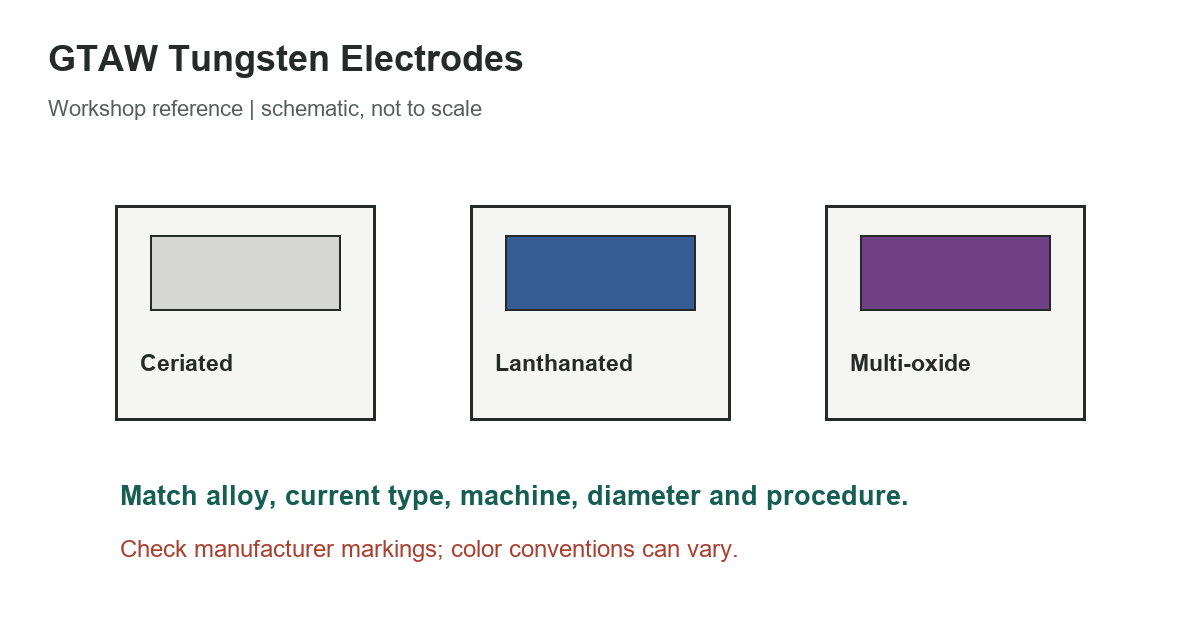
The colors below follow Lincoln Electric’s product information. Other suppliers or color-code systems may differ, so identify the package classification and oxide composition rather than relying on color alone. The recommendations are starting cues: confirm the specific alloy, diameter, power source, AC/DC balance, tip preparation and procedure.
[gs_table id=”10962″]
Why many welders choose a rare-earth type
MillerWelds recommends ceriated or lanthanated electrodes as alternatives to thoriated tungsten, noting their suitability across many welding tasks and their performance on AC. Lincoln lists ceriated, lanthanated and multi-oxide products for AC and DC use. These manufacturer recommendations do not mean every electrode is interchangeable in every qualified procedure; when a WPS or product manual specifies a classification, follow it.
Lincoln describes its 2% ceriated product as primarily used with DC and usable with AC, and its 2% lanthanated product as providing consistent AC/DC performance. Its WX product uses multiple oxides and is presented for a broad amperage range. Product composition and stated behavior are brand-specific, so compare the actual supplier data sheet before substituting one type for another.
Handle thoriated electrodes thoughtfully
Thoriated tungsten contains thorium oxide. Manufacturer guidance notes radiation concerns and recommends considering non-radioactive alternatives. If a procedure or existing setup calls for thoriated tungsten, review the product safety data sheet and workplace controls, particularly for sharpening and handling grinding dust. The American Welding Society advises high-efficiency dust collection at the grinding point, periodic ventilation assessment, training and procedures for storage, grinding, housekeeping and disposal. Follow the product SDS and applicable local rules.
The IAEA describes the risks from storage, handling and welding as low when controls are followed, while recommending extra care for grinding because airborne dust can be produced. Its practices include a dedicated, ventilated grinding area, suitable dust collection, and controlled cleanup. These are not a substitute for a workplace exposure assessment or jurisdiction-specific requirements. When choosing a new electrode for a task, compare ceriated and lanthanated options with the equipment manufacturer’s guidance and the qualified welding procedure.
Match the type to the complete setup
First identify the base metal and whether the process is AC or DC. Then check the welding power source, required current, electrode diameter, tip shape and grinding method. Miller lists these as selection questions and notes that electrode alloy affects performance. Current capacity depends on diameter, polarity, waveform, electrode preparation and product composition, so an amperage range from one type should not be copied to another without confirmation.
Prepare the tip using the electrode maker’s instructions. Lincoln recommends a lengthwise grinding pattern to help reduce arc wander and inclusions and describes different tip approaches by diameter and application. Use a dedicated grinding wheel and dust controls suitable for the electrode material. Keep cross-contamination from steel, aluminum or other shop work from reaching the tungsten tip or weld zone.
Inspect the tip after grinding and after any contact with the weld pool. Contamination, a damaged point or a changed electrode diameter can alter arc behavior. Regrind using the specified direction and shape rather than trying to compensate with an unverified current adjustment.
For related welding references, see our Fleetweld 5P+ electrode settings, FCAW deposition rate guide, and cutting torch tip chart. They address different welding and thermal-cutting processes; they are not GTAW tungsten recommendations.
Sources
MillerWelds’ electrode overview covers alloy types, color cues and grinding preparation. Its AC tungsten guide discusses rare-earth alternatives. Lincoln Electric’s product information lists composition and application cues. The AWS safety fact sheet and IAEA guidance describe dust controls for thoriated-electrode grinding.