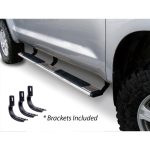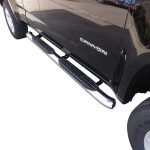
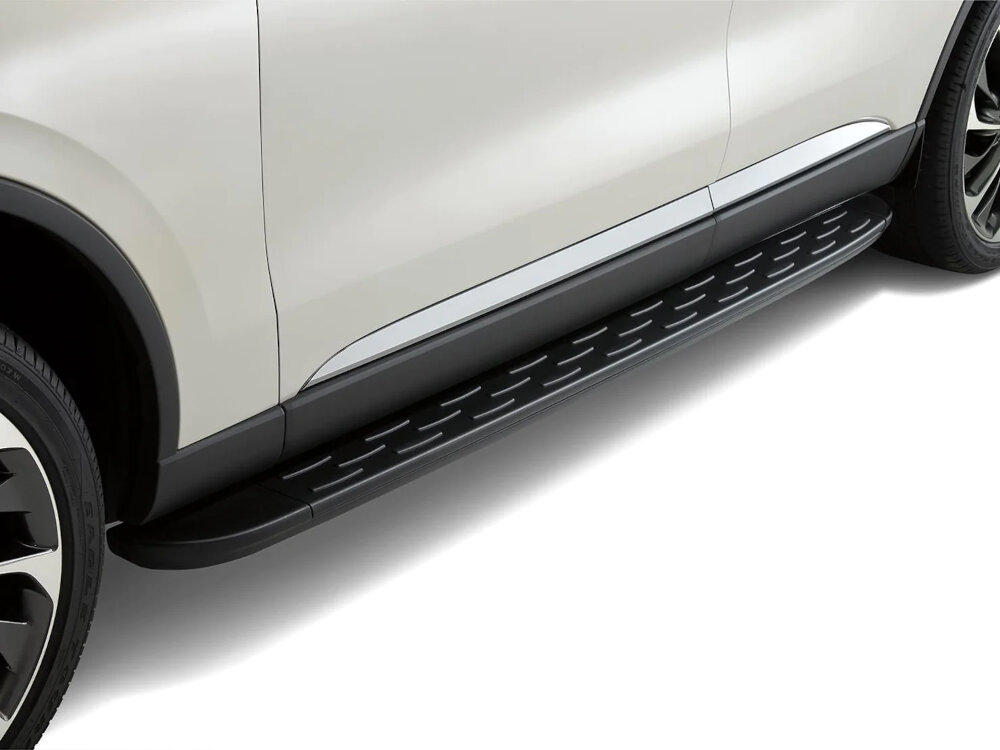
Quick answer: Running boards are fixed or retractable side steps mounted below the doors of a truck, SUV, or van. They reduce the vertical step into the cab and provide a larger foothold than many tubular step bars. They are worth considering when passengers struggle with a tall step-in height, when you regularly reach a roof rack, or when a work vehicle needs dependable entry throughout the day. They are not automatically off-road armor, a jack point, or a universal-fit accessory.
What Running Boards Do
A running board creates an intermediate step between the ground and the vehicle floor. Instead of lifting a foot directly to the sill, a passenger steps onto the board and then into the cab. This can make entry more controlled for children, shorter adults, older passengers, and anyone carrying tools or cargo.
The long tread can also help when loading a roof box, washing the roof, or reaching into a truck bed from the side. Some boards catch a portion of mud and gravel thrown toward the rocker panel, although they are not a replacement for splash guards. Their visual effect is secondary to safe foot placement, bracket strength, and vehicle-specific fitment.
| Job | Benefit | What determines success |
|---|---|---|
| Cab entry and exit | Reduces the height of each step | Board height, tread width, and door coverage |
| Passenger stability | Provides a predictable foothold | Grip in rain, snow, and work-site dirt |
| Roof access | Adds a standing position beside the doors | Published load rating and secure brackets |
| Rocker-area coverage | Can reduce shoe scuffs and some road spray | Board position and vehicle body shape |
| Appearance | Changes the side profile of the vehicle | Finish, end caps, and how far the board projects |
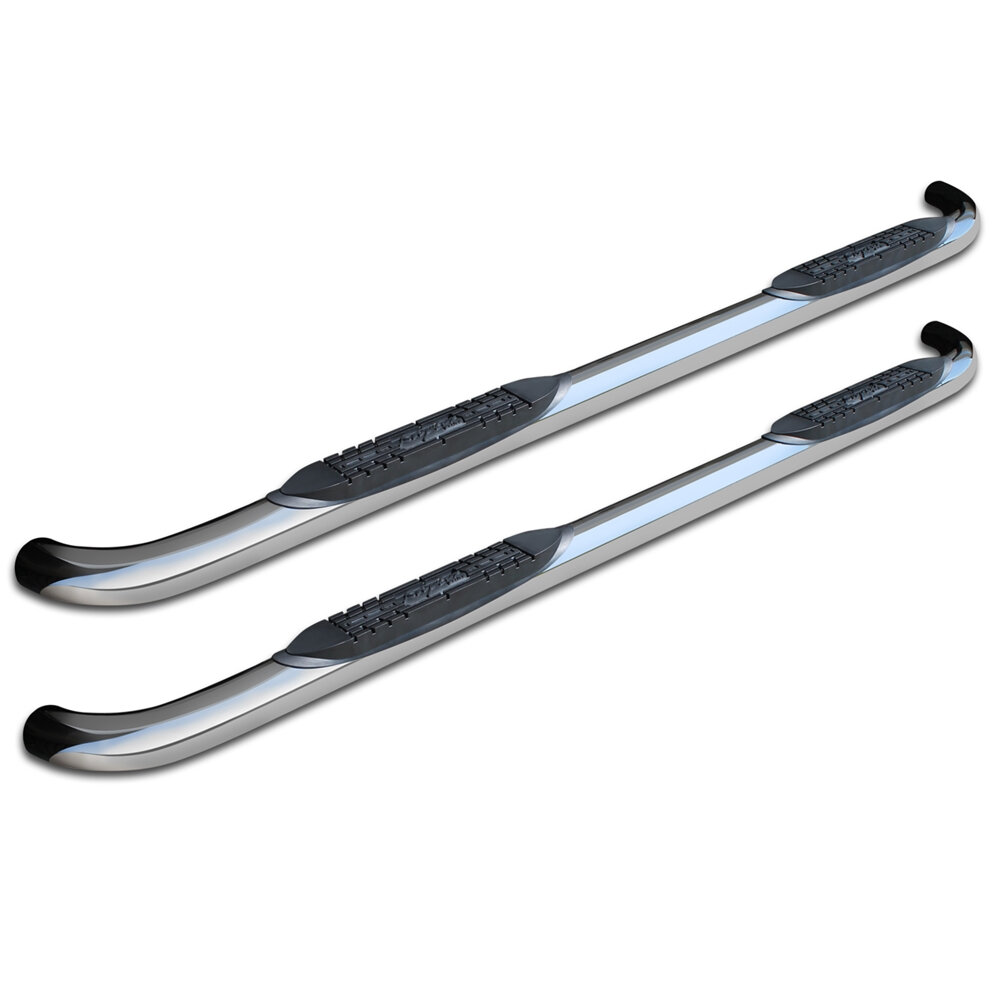
Running Boards, Nerf Bars, And Rock Sliders
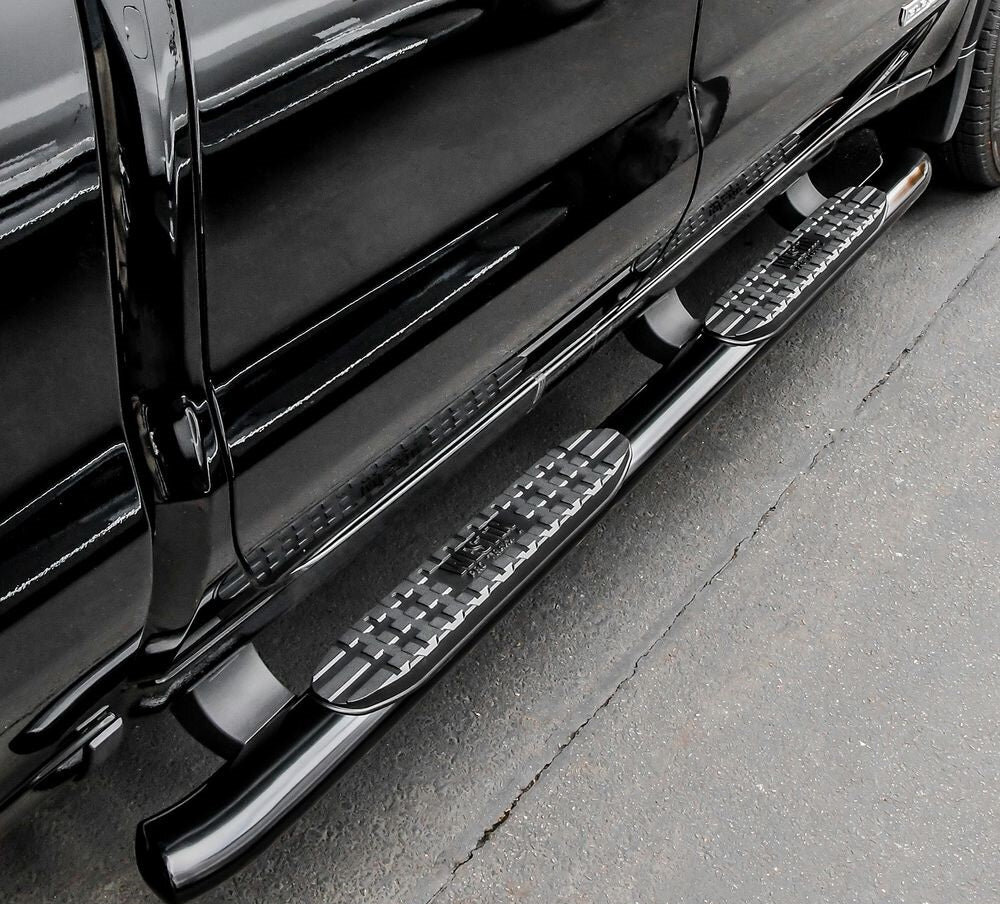
The names are often used loosely in product listings. A running board normally has a wide, flat tread extending along most of the cab. A nerf bar or step bar is commonly round or oval tubing with separate pads below the doors. Both are primarily access products. A rock slider is a different component designed to protect the rocker area from trail impacts.
Mounting strength cannot be judged from shape alone. Some wide boards use light rocker-panel brackets, while some compact steps use heavy frame attachments. Review the installation manual and intended use. Do not assume a product can support vehicle weight, side impact, recovery loads, or jacking unless the manufacturer explicitly designed and rated it for that purpose.
| Component | Main purpose | Typical design | Main limitation |
|---|---|---|---|
| Fixed running board | Everyday entry | Wide tread along the cab | Always reduces side clearance |
| Nerf bar / step bar | Door-area foothold | Round or oval tube with pads | Less continuous standing area |
| Power running board | Low step that stows away | Motorized board and linkage | Higher cost and maintenance |
| Rock slider | Off-road rocker protection | Heavy rail tied to strong structure | May be a less comfortable daily step |
When Running Boards Are Worth It
Running boards provide the most value on tall pickups, body-on-frame SUVs, lifted vehicles, and work trucks that are entered repeatedly. Watch how passengers currently use the vehicle. If they pull hard on the steering wheel or grab handle, slide across the seat edge, or jump down to exit, a properly positioned step can make the movement easier.
They can also be useful for families, but a board does not replace supervision. Children should use secure handholds, and the tread must remain clear of ice and mud. For a vehicle used on narrow trails, deep snow, or construction sites, compare the access benefit against reduced ground clearance and exposure to obstacles.
| Situation | Likely value | Priority |
|---|---|---|
| Lifted truck or heavy-duty pickup | High | Enough drop without excessive clearance loss |
| Family SUV | High when passengers need help | Full door coverage and wet-weather grip |
| Work fleet | High with frequent entry | Durable tread, replaceable parts, and corrosion protection |
| Low crossover | Often limited | Confirm the board does not create an awkward extra step |
| Rock-crawling vehicle | Depends on design | Use a true slider if impact protection is required |
How To Choose The Right Board
Start with exact fitment: year, make, model, cab configuration, wheelbase, powertrain, and any factory cladding or existing steps. Cab names such as extended, double, quad, and crew are not interchangeable. A board can be the correct length but still use the wrong bracket spacing or interfere with a fuel tank, battery enclosure, heat shield, or factory body mount.
Next, consider usable step geometry. The board should be low enough to reduce the climb, far enough outward for most of a shoe, and close enough to the body that it does not become an obstacle. Check all doors before tightening. Wheel-to-wheel boards may improve bed access but need more clearance checks and often additional support.
Compare the load rating only when the manufacturer explains whether it applies per side, per board, or at a particular point. A large number in a listing does not compensate for poor bracket fit. For power boards, confirm that replacement motors, linkages, wiring, and service information are available.
Fitment And Safety Checklist
| Check | Why it matters | Warning sign |
|---|---|---|
| Exact vehicle application | Mounting points change by body and powertrain | The listing relies only on approximate board length |
| Bracket locations | They transfer passenger load into the vehicle | Holes require force or brackets sit twisted |
| Door coverage | Passengers need a natural step at each seat | The tread ends before a rear door |
| Ground and tire clearance | The board must avoid obstacles and moving tires | It blocks lift points or hangs unusually low |
| Wet and winter grip | Water, ice, and mud reduce traction | Smooth decorative tread with no drainage |
| Intended use | Steps and sliders carry different loads | No statement about jacking or trail impact |
Fixed Versus Power Running Boards
Fixed boards are simpler, normally less expensive, and always available as a step. Their disadvantages are permanent visibility and reduced clearance. Power boards deploy lower when a door opens and retract for a cleaner profile, which can improve access on a tall vehicle. The tradeoff is a motorized system exposed to water, salt, mud, ice, and road debris.
For a daily vehicle in a winter climate, serviceability matters as much as appearance. Ask how the board behaves when blocked, how manual override works, where the control module is mounted, and whether the hinges can be cleaned without disassembly. A fixed board may be the better choice when simplicity and fleet uptime matter more than a hidden step.
Passenger Comfort And Everyday Tradeoffs
A useful board should support a natural movement rather than force passengers to turn a foot sideways or search for the tread. Observe the distance from the ground to the board and from the board to the cab floor. Two moderate steps are generally easier to manage than one very small first step followed by a large climb. Secure factory grab handles should complement the board; passengers should not need to pull on the steering wheel, door, or seat bolster.
Board width also changes how people exit. A tread that is too narrow may only catch a heel, while an excessively wide board can brush clothing and collect more road spray. The best position varies with vehicle height, door opening, seat position, and passenger needs. Before final tightening, have the regular users test the position while the vehicle is parked and the fasteners are still only snug.
There are ownership costs beyond purchase price. Fixed boards may increase washing time and can trap salt around brackets. Power boards add motors, pivots, wiring, and control components that eventually need service. A painted or powder-coated steel board may need coating repairs after chips, while aluminum can still suffer finish damage and corrosion around dissimilar fasteners. Choose the simplest design that meets the access need and that can be maintained in the vehicle’s real climate.
Installation Planning
Vehicle-specific instructions control the installation. Inventory the brackets and hardware, identify driver and passenger sides, and start every fastener loosely before final alignment. Check behind any proposed drilling location for fuel and brake lines, wiring, tanks, batteries, and interior components. Never work under a vehicle supported only by a jack.
After alignment, tighten fasteners in the specified sequence and use the supplied torque values. Do not borrow torque settings from another kit. Recheck the board after initial use and after severe winter or off-road conditions. Movement, clicking, widening gaps, cracked coating, or elongated holes should be corrected before regular use continues.
Maintenance And Common Problems
Wash road salt, packed mud, and gravel from the tread, bracket joints, and drain openings. Inspect fasteners, end caps, step pads, and coating edges. Replace a loose pad before it becomes a trip hazard. Touch up exposed steel with a compatible corrosion coating after cleaning.
On power boards, first clean the pivots and check for debris when deployment becomes slow or noisy. Use only the lubricant and procedure recommended for that mechanism; heavy grease can trap grit in some designs. Stop using a board that binds, deploys unpredictably, contacts the body, or has a loose structural bracket.
Related GarageSanctum Guides
- Compare nerf bars and running boards when choosing the basic step style.
- Understand frame and rocker mounting before comparing bracket kits.
- Review running board materials for corrosion, weight, and tread considerations.
- Choose a running-board installer for drilling, fabrication, body mounts, or power-step wiring.
Source Notes
- Ford power running board owner guidance identifies mud, snow, ice, salt, and debris as conditions that can affect the mechanism.
- ARIES side bars vs running boards guide describes common differences in shape and stepping surface.
- NHTSA recalls lets owners check vehicle safety recalls by VIN before modifying or servicing a vehicle.