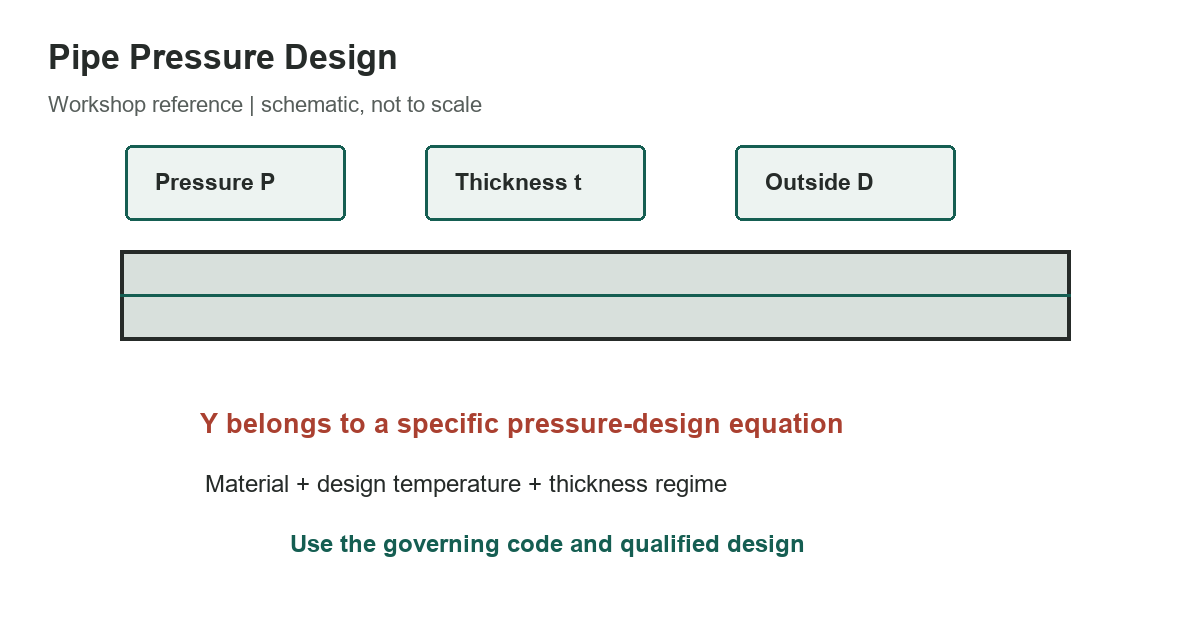
In ASME B31.3 process-piping design, coefficient Y is one input to a defined pressure-design equation for straight pipe. It is not a general temperature multiplier, a material-strength value, or a stand-alone rating for a pipe. The current code edition and its scope govern the design. For related references, see our pipe-size chart, compressed-air pipe chart, and workshop planning guide.
Selected Y values and their limits
The examples below show only a few entries that align with the 2024 B31.3 coefficient table and the selected Machinery’s Handbook reference. They are not a substitute for the full code table. The correct value depends on the exact material group and design temperature, and the code defines when the tabulated coefficient applies. For other thickness regimes, the code specifies a different determination.
[gs_table id=”10896″]
Do not use the table above to infer a pipe pressure rating. Y is used with other equation inputs, including design pressure, outside diameter, wall thickness, allowable stress and applicable joint factors. The required thickness also depends on allowances and other code rules. A pipe schedule alone does not establish that a proposed system is suitable for a service or design temperature.
Identify the applicable design case
Start by confirming that ASME B31.3 is the governing piping code for the facility and service. ASME describes its scope as process piping used across industries such as chemical processing, petroleum, power generation, semiconductor and cryogenic plants. Other piping systems can fall under different B31 sections, building codes, pressure-vessel rules or jurisdictional requirements. Do not select B31.3 merely because a line carries a fluid.
Next identify the design temperature and the material specification and grade. A broad label such as “steel” is not enough: ferritic, austenitic and nickel-alloy groupings have different Y entries at some temperatures. The current code table may also name specific UNS alloy numbers or distinguish other material categories. Confirm the exact entry rather than carrying a value across to an unlisted alloy.
Then verify the thickness condition. The Y table shown in B31.3 is tied to a specified relationship between pressure-design thickness and outside diameter. If the case falls outside that regime, the code provides a different rule. An intermediate temperature may require interpolation where permitted by the code. Neither action should be guessed from the nearest table value without checking the governing paragraph and notes.
Why a Y value is not a safety check
Designing process piping requires more than solving one equation. Material allowable stress changes with temperature and must be obtained from the applicable code table. Design pressure, corrosion and erosion allowances, manufacturing tolerances, weld quality, branch connections, fittings, external loads, thermal expansion, supports and inspection requirements can also affect the system. The responsible designer must check every relevant condition and applicable code provision.
Do not use a web calculator or this selected reference as approval to operate, modify or pressure-test a line. A piping system can fail from an incorrect material, inadequate wall, unsupported loads, corrosion, defective joints or an unsuitable test procedure even when a single equation appears to pass. High-pressure, hazardous-fluid and elevated-temperature services require qualified engineering review and the required regulatory approvals.
For a traceable calculation, record the code edition, jurisdiction, material specification and grade, design pressure and temperature, outside diameter, measured or specified thickness, allowances, weld factors and all other equation inputs. Have a qualified piping engineer independently review the assumptions and results. If the service or governing code changes, repeat the review rather than reusing an old coefficient.
Use the governing code
ASME lists B31.3-2024 as the current Process Piping edition. The 2020 handbook extract is a useful index to the subject, but code editions can revise table labels, material categories, notes and surrounding design rules. Obtain and consult the applicable licensed edition, along with jurisdictional requirements and project specifications. If an edition is incorporated by regulation or contract, that adopted edition may control even when a newer publication exists.
This concise reference is intended to help readers recognize where Y belongs and what to verify before a calculation. It does not reproduce the full standard, provide a design method, or certify any piping system. For a real installation, defer to the adopted code and a qualified designer.
Sources
See ASME B31.3-2024 for the current code edition and scope, and ASME’s Process Piping guide for an overview. The selected examples are limited excerpts checked against the handbook’s coefficient table; the complete current code, notes and governing jurisdiction remain controlling.