PVC Pipe Sizes Chart
Quick answer: PVC is sold by nominal size, not by its exact inside or outside diameter. For example, Spears lists 1/2-inch Schedule 40 PVC at a 0.840-inch outside diameter and a 0.602-inch average inside diameter. Use the nominal size to identify compatible fittings; use measured dimensions when a close physical fit matters.
How To Read PVC Pipe Dimensions
- Nominal size: the trade size used to buy pipe and fittings.
- OD: outside diameter. PVC fittings are based around this dimension.
- ID: inside diameter. This affects flow and what can pass through the pipe.
- Minimum wall: the minimum wall thickness for the schedule or pipe class.
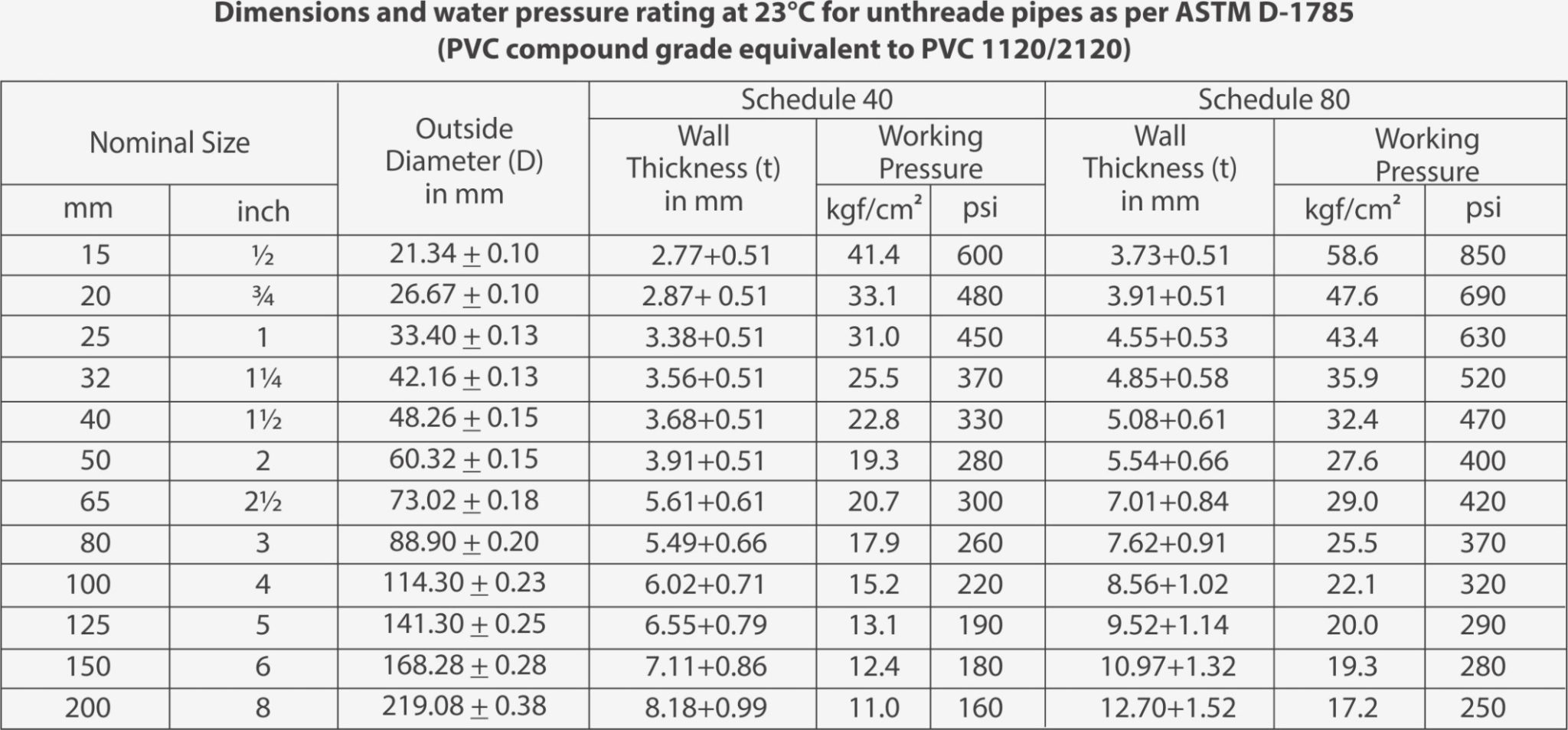
For the same nominal size, Schedule 40 and Schedule 80 have the same outside diameter, while Schedule 80 has a thicker wall and smaller average inside diameter. The charts show manufacturer-published average dimensions; actual products and measurements can vary, so check the pipe marking and measure when clearance is critical.
PVC Schedule 40 Sizes Chart
| 1/2 in | 0.840 in | 0.602 in | 0.109 in | Small water lines, DIY frames, light irrigation |
|---|---|---|---|---|
| 3/4 in | 1.050 in | 0.804 in | 0.113 in | Small irrigation and light shop projects |
| 1 in | 1.315 in | 1.029 in | 0.133 in | General residential and shop utility runs |
| 1-1/4 in | 1.660 in | 1.360 in | 0.140 in | Higher-flow drain, vent, or irrigation sections |
| 1-1/2 in | 1.900 in | 1.590 in | 0.145 in | Common for drains, vents, and larger water movement |
| 2 in | 2.375 in | 2.047 in | 0.154 in | Garage drains, sump/discharge routing, dust collection experiments |
| 3 in | 3.500 in | 3.042 in | 0.216 in | Larger drain and vent work |
| 4 in | 4.500 in | 3.998 in | 0.237 in | Main drainage and large air/dust routing projects |
8 rows
Scroll horizontally to view all columns.
PVC Schedule 80 Sizes Chart
| 1/2 in | 0.840 in | 0.526 in | 0.147 in | Thicker wall, smaller ID |
|---|---|---|---|---|
| 3/4 in | 1.050 in | 0.722 in | 0.154 in | Thicker wall, smaller ID |
| 1 in | 1.315 in | 0.936 in | 0.179 in | Better for higher-demand applications |
| 1-1/4 in | 1.660 in | 1.255 in | 0.191 in | More wall thickness than Schedule 40 |
| 1-1/2 in | 1.900 in | 1.476 in | 0.200 in | Stronger wall, reduced flow area |
| 2 in | 2.375 in | 1.913 in | 0.218 in | Useful when strength matters more than maximum flow |
| 3 in | 3.500 in | 2.864 in | 0.300 in | Much thicker wall and smaller ID |
| 4 in | 4.500 in | 3.786 in | 0.337 in | Heavy-wall option for larger lines |
8 rows
Scroll horizontally to view all columns.
PVC Thinwall And SDR Sizes
Thinwall PVC is often labeled by SDR (standard dimension ratio), which relates outside diameter to wall thickness. Do not infer pressure suitability from the SDR number alone; check the specific product marking, rating, and local requirements.
| Schedule 40 PVC | Common wall series; product pressure rating depends on temperature and service | Water and other listed service where local requirements permit | Spears says not for compressed-air or gas distribution |
|---|---|---|---|
| Schedule 80 PVC | Thicker wall and smaller inside diameter than Schedule 40 at the same nominal size | Water and other listed service where local requirements permit | Spears says not for compressed-air or gas distribution |
| SDR 21 PVC | Thinwall pressure pipe with wall thickness based on OD ratio | Irrigation and some water-service applications | Confirm the pipe's pressure listing and local code; do not infer compatibility from SDR alone |
| DWV PVC | Drain, waste, and vent pipe | Non-pressure drainage and venting | Not for compressed air or pressure systems |
4 rows
Scroll horizontally to view all columns.
Which PVC Size Should You Use?
For fittings and replacement parts, start with the nominal size printed on the pipe. Use inside diameter for flow or clearance checks and outside diameter for clamps, holes, and pass-throughs. Spears states that Schedule 40 and Schedule 80 PVC are not for compressed-air or gas distribution. Pressure ratings also depend on product, temperature, and service; verify the pipe marking and applicable code before installation.
Related references: pipe size chart in mm and inches, PEX tubing size chart, and what size air compressor you need.
Source Notes
Dimensions were cross-checked against PVC Schedule 40 and Schedule 80 dimension references from Engineering ToolBox, Spears Schedule 40 technical data, and Spears Schedule 80 technical data. Always use the rating printed on the actual pipe for pressure-sensitive work.