The right garage door opener is determined by the door system, not by width alone. A properly balanced sectional aluminum door often fits a MED or roughly 1/2 HPS-equivalent opener. A heavily used garage may justify a PLUS or roughly 3/4 HPS-equivalent tier. A heavy wood, one-piece, or severe-weather door may need a MAX or roughly 1-1/4 HPS-equivalent tier. Those labels are manufacturer comparison tiers, not universal motor measurements.
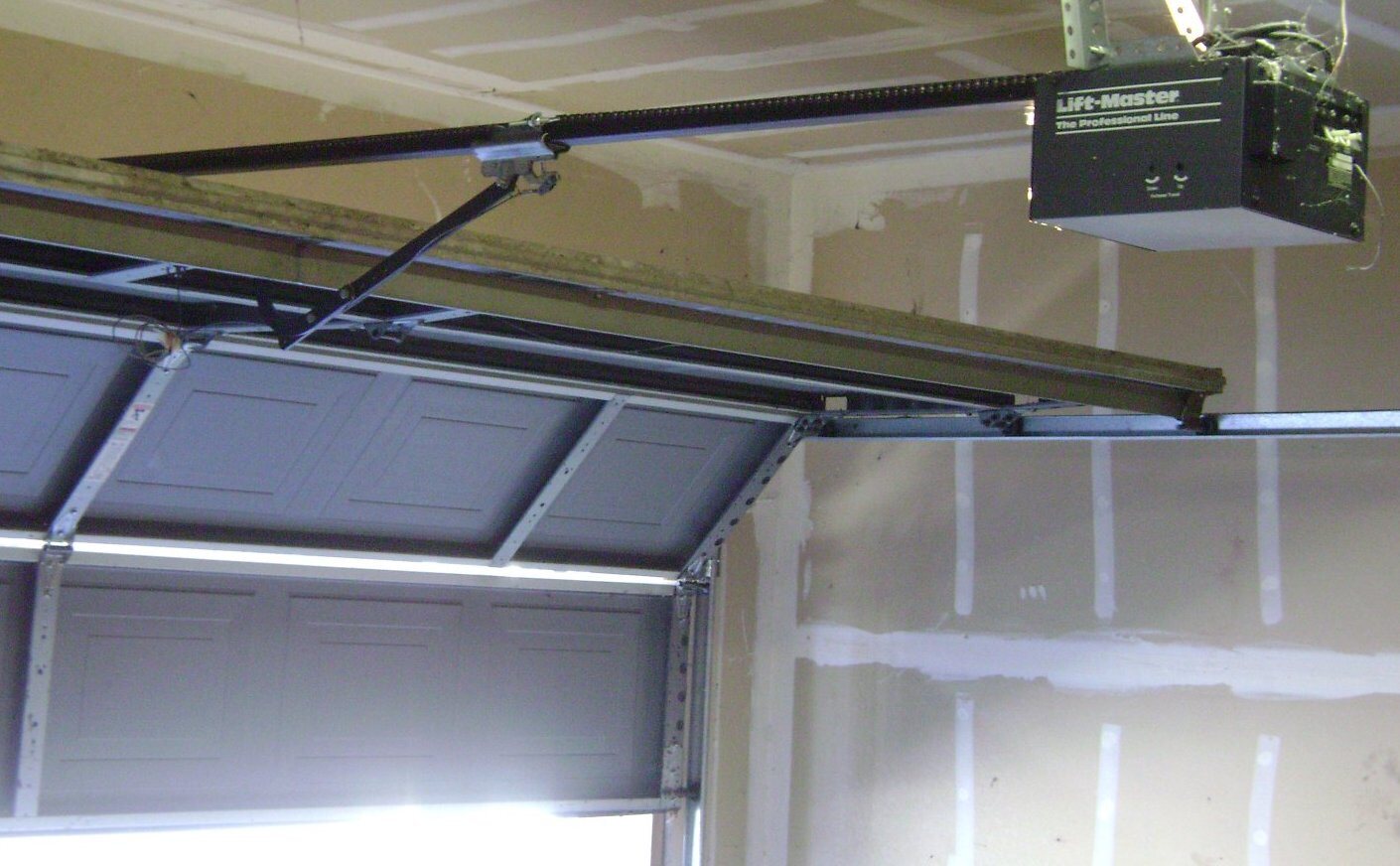
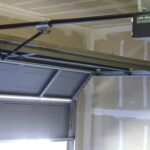
Ceiling-mounted chain-drive opener above a sectional garage door. Photograph by Oleg Alexandrov, Wikimedia Commons, public domain. The image is illustrative and does not identify a current model.
Quick garage door opener horsepower chooser
| Door and use case | Lift-power tier to investigate | Main caution |
|---|---|---|
| Typical sectional aluminum or light steel door, normal household use | MED, about 1/2 HPS-equivalent | Confirm the door is balanced and the opener is rated for its height and construction. |
| Standard sectional door used many times each day or by several drivers | PLUS, about 3/4 HPS-equivalent | Higher lift power does not correct worn rollers, bad springs, or a damaged track. |
| Heavy insulated, wood, overlay, carriage-house, or one-piece door | MAX, about 1-1/4 HPS-equivalent | Check the door manufacturer’s weight, reinforcement, and operator compatibility. |
| Cold climate, wind exposure, or unusually high duty cycle | PLUS or MAX, depending on the door system | Consider battery backup, cold-weather conditions, and service requirements separately. |
| Door that feels heavy or needs two hands to lift manually | Stop and inspect the door first | Do not install a stronger opener as a substitute for spring or balance repair. |
This chooser follows Chamberlain’s current buyer-guide categories: MED is listed as about 1/2 HPS-equivalent for standard sectional aluminum doors, PLUS as about 3/4 HPS-equivalent for heavily used garages, and MAX as about 1-1/4 HPS-equivalent for heavier or one-piece doors and severe weather. The manufacturer says these figures are for comparison and that DC lift capacity is typically not measured in horsepower.
HP, HPS, and lift power are not the same thing
Older openers are often described by AC motor horsepower: 1/3 HP, 1/2 HP, 3/4 HP, or 1 HP. Newer retail openers commonly use DC motors and may use labels such as HPc, HPS, or a lift-power tier. These labels help compare products within a manufacturer’s range, but they do not create a universal cross-brand test standard.
The useful question is not “What is the biggest motor I can buy?” It is “What lift-power class is appropriate for this door, this duty cycle, and this installation?” A properly balanced door should move with limited effort before the opener is attached. The opener supplies controlled motion and convenience; it should not be used as the door’s counterbalance system.
Door construction matters more than width alone
Two doors with the same width can place very different demands on an opener. A lightweight, uninsulated steel or aluminum sectional door may be much easier to move than a wood door with overlay trim, windows, or thick hardware. A one-piece tilt-up door also follows a different movement path from a sectional door and may need a different operator arrangement.
Consider these variables before choosing a lift-power tier:
- Door construction: aluminum, steel, insulated steel, wood, composite, or overlay.
- Door type: sectional, one-piece tilt-up, carriage-house style, or another design.
- Approximate weight: use the door manufacturer’s value when available instead of guessing from width.
- Hardware condition: rollers, hinges, tracks, brackets, and bearings add resistance when worn or damaged.
- Counterbalance: torsion or extension springs should carry most of the door’s static weight.
- Height and rail: an 8- or 10-foot door may need a compatible rail-extension kit.
- Use frequency: count daily open-and-close cycles, not just the number of household occupants.
Standard sectional doors
For a normal residential sectional aluminum or light steel door, a 1/2 HP AC class or MED lift-power tier is a reasonable starting point when the door is correctly balanced. This does not mean every 1/2 HP opener fits every single-car door. Check the opener’s approved door height, weight, track arrangement, and included rail.
For a standard sectional door that is used heavily, PLUS can provide more reserve. Multiple drivers, frequent deliveries, a workshop entrance, or repeated daily cycling can justify investigating the next lift-power class. The reason is not that a standard door suddenly becomes heavier. The reason is that a motor with more reserve may work less aggressively across repeated cycles, subject to the manufacturer’s ratings and warranty conditions.
Do not select the drive system from horsepower alone. Belt drive, chain drive, screw drive, and wall-mount or jackshaft designs are separate decisions. Noise, ceiling space, door compatibility, lighting, battery backup, and smart controls may matter more than another step of nominal lift power.
Heavy wood, overlay, and one-piece doors
Heavy wood doors, wood doors with added overlay, and carriage-house designs can exceed the load that a basic opener tier handles comfortably. A MAX or roughly 1-1/4 HPS-equivalent tier is the manufacturer’s category to investigate for heavier doors and one-piece doors, but the final choice still depends on the door system and installation instructions.
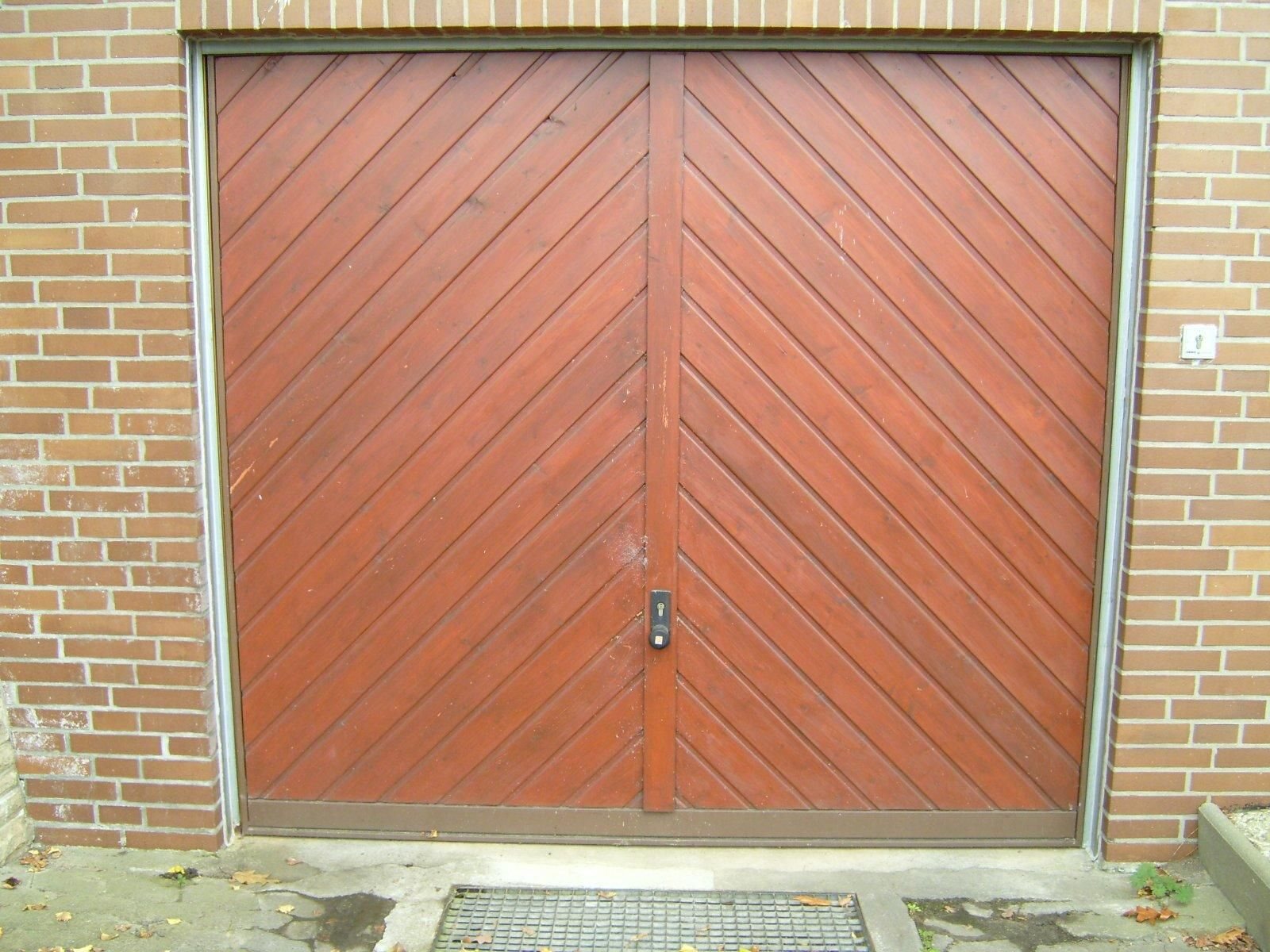
Heavy wooden one-piece garage door, shown for construction context. Image from Public Domain Images via Wikimedia Commons, public domain. The photograph is not a weight rating for this or any other door.
Do not assume that a wood appearance means a specific weight. Measure or obtain the actual door specification. Added windows, decorative hardware, insulation, and paint can change the load. A door installer or trained door-systems technician can verify the counterbalance and the operator reinforcement.
Double-wide doors
A double-wide door is not automatically a MAX-door application. Width increases the size of the moving system, but construction, weight, balance, spring design, and daily cycles still control the operator requirement. A properly balanced, lightweight double door may need less lift power than a narrow, heavy wood door.
For a double-wide sectional door, check the opener’s maximum door size and weight, not only its horsepower label. Confirm that the top section is reinforced for the operator arm and that the ceiling structure can support the rail or wall-mount hardware. The door maker’s instructions take priority over a generic buyer chart.
Cold weather and high-use garages
Cold weather can increase friction and change how lubricants behave. Snow, ice, stiff seals, and a door that freezes to the floor can create a condition that no motor tier should be expected to overcome. Clear the obstruction and correct the door condition before operating it repeatedly.
For areas with severe weather or frequent outages, battery backup is a separate selection criterion. Chamberlain lists battery backup as an option on selected models, and current LiftMaster products also identify battery backup as a model-specific feature. Do not infer battery capability from the lift-power label.
High-use garages should also be checked for cycle-life ratings, warranty terms, cooling, lighting, and serviceability. PLUS or MAX can be a useful starting category, but a higher label does not remove the need to match the opener to the door and the installation.
A stronger opener does not fix an unbalanced door
DASMA states that a garage door should be balanced by its spring system and warns that a heavier-duty opener is not the answer when a door feels heavy or requires two hands to open. If the door is difficult to lift manually, stops at one point, drifts down, or will not stay partially open, stop the opener-selection process and arrange an inspection.
Garage door springs are under high tension. Do not adjust or replace them as a casual horsepower experiment. A trained door-systems technician should diagnose a door that is out of balance, damaged, or difficult to move. Increasing opener force or installing a larger motor can overstress the door, operator, brackets, or safety system.
Belt, chain, and wall-mount choices are separate
Choose the drive system after you establish the door’s lift-power requirement:
- Belt drive: a strong option when low noise matters, especially near bedrooms or living space.
- Chain drive: often a practical choice for durability and value when some mechanical noise is acceptable.
- Wall-mount or jackshaft: useful when ceiling space, storage, or a high door makes an overhead rail inconvenient, but it requires compatible torsion hardware and door conditions.
- Screw or other designs: evaluate by current manufacturer specifications, temperature range, service support, and door compatibility.
The best belt-drive garage door opener guide can help with the drive-system decision. For brand-level comparisons, see best garage door opener brands. For a broader buying workflow, see how to choose a garage door opener, then verify the rail length and extension requirement for your door height.
Buyer checklist
Before ordering an opener, record:
- Door type and construction.
- Door width and height.
- Approximate or manufacturer-listed weight.
- Whether the door stays balanced 3 to 4 feet above the floor when disconnected.
- Daily open-and-close cycles.
- Ceiling height and available rail space.
- Need for battery backup, Wi-Fi, camera, lighting, or a wall-mount design.
- The manufacturer’s limits for door size, weight, rail, and reinforcement.
The simplest safe rule is to choose the manufacturer’s appropriate lift-power tier for a correctly balanced door. Use HP or HPS labels as comparison language, not as a promise that one brand’s 3/4 rating equals another brand’s motor performance.
Sources and update note
- Chamberlain Garage Door Opener Buyer’s Guide
- LiftMaster 6690L 1-1/4 HPS-equivalent opener
- DASMA garage door opener safety tips
- DASMA garage door systems safety tips
- DASMA standards and counterbalance resources
Recheck the current opener manual and door documentation before installation. Product names, ratings, compatible rail lengths, and availability can change.