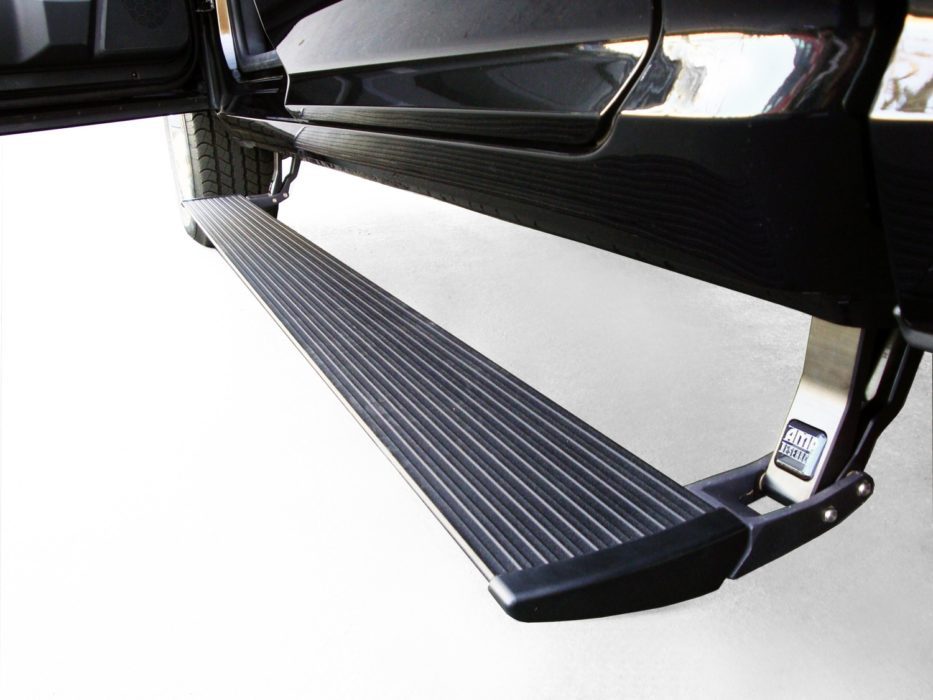
Quick answer: AMP Research PowerSteps are vehicle-specific powered running boards that deploy when a door opens and retract after the door closes. The current family includes the original PowerStep, lower-dropping XL, harsh-environment XTreme, and app-controlled Smart Series in selected applications. Choose by exact year, make, model, cab, and powertrain rather than board length or appearance. Before buying a new or used kit, verify the complete part number, installation instructions, electrical interface, included brackets, and replacement-parts support.
What AMP Research PowerSteps Actually Do
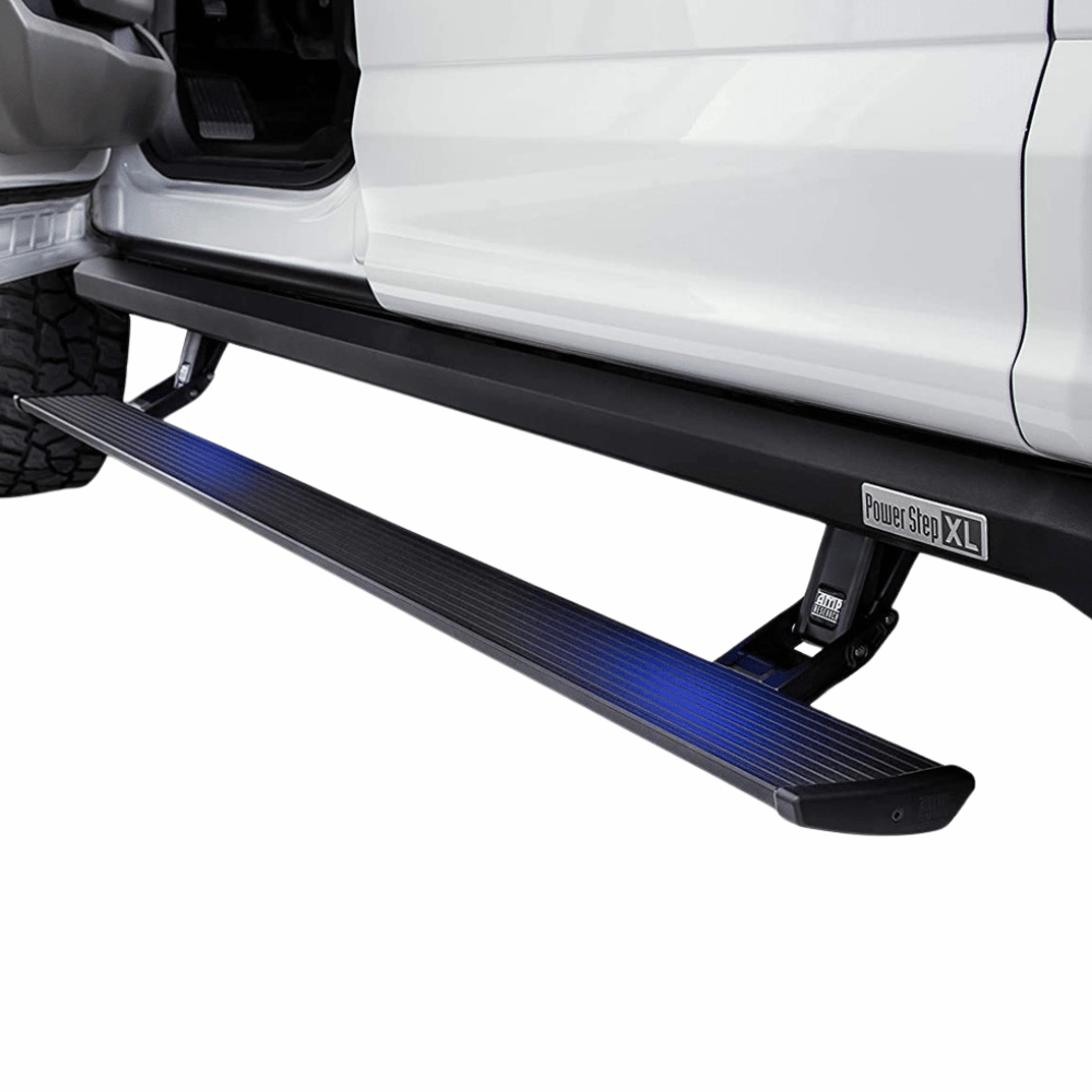
A PowerStep combines an aluminum step, pivoting linkage arms, electric drive components, a controller, wiring, door-status input, brackets, hardware, and courtesy lights. Opening a supported door tells the system to deploy the board to a lower step position. Closing the doors tells it to retract toward the rocker area, preserving more clearance and a cleaner side profile than a permanently exposed board.
AMP Research is presented by RealTruck as one of its brands. That ownership detail matters when searching for current application data, warranty terms, technical support, and replacement parts. Old articles, marketplace listings, and used parts may still use earlier branding or discontinued part numbers, so the current official application record should control the purchase.
Current PowerStep Families Compared
| PowerStep family | Main distinction | Best starting use case | Important verification |
|---|---|---|---|
| PowerStep | Original retracting 6-inch step design | Daily-use truck or SUV needing a lower entry step | Exact vehicle application and electrical connection |
| PowerStep XL | Deploys lower and retracts into a rail-style housing | Lifted or especially high-clearance vehicles | Actual deployed height, rocker fit, and listed application |
| PowerStep XTreme | Dual-motor configuration on listed applications | Frequent mud, snow, salt, or demanding environments | Drilling/splicing requirements and application-specific parts |
| PowerStep Smart Series | Phone-app override functions on supported kits | Owners wanting manual deploy/retract control without a separate switch | Vehicle support, app/module generation, and OBD-II integration |
These descriptions are product-family distinctions, not a promise that every family fits every vehicle. RealTruck’s current pages show that specifications and installation details can change by part number. Always enter the complete vehicle before comparing prices or features.
Fitment Is More Than Year, Make, And Model
A correct application can depend on cab length, number of doors, wheelbase, drivetrain or powertrain, factory rocker equipment, and other packages. Regular, extended, and crew cabs may use different board lengths or bracket positions. Diesel, hybrid, and electric variants can route batteries, tanks, exhaust components, or wiring through areas used by another application’s brackets.
Record the full vehicle description from the VIN and door label, then use the official selector to obtain the AMP/RealTruck part number. Open that exact part-number page and its installation PDF. Confirm every application note, including trimming, drilling, wire splicing, bracket position, and excluded configurations. A listing that merely says it fits an F-150, Silverado, Ram, or Wrangler is not enough evidence.
| Check before purchase | Why it changes fitment | Evidence to save |
|---|---|---|
| Year, make, model, and generation | Body and electrical architecture change | Vehicle selector result and part number |
| Cab and door configuration | Controls board length and trigger behavior | Door label, cab photo, application note |
| Wheelbase and bed length | Can distinguish visually similar configurations | VIN/build data and measured wheelbase |
| Engine, hybrid, or EV configuration | May alter underbody clearance and routing | Exact powertrain listing in instructions |
| Factory steps or rocker equipment | Can conflict with brackets or trim | Removal requirements in installation PDF |
| Controller and harness method | Determines electrical compatibility | Connector illustrations and kit contents |
What A Complete Kit Should Include
Do not evaluate a used kit from the two boards alone. A usable system normally needs the correct left and right linkage assemblies, motors, vehicle-specific brackets, controller, harness, door or diagnostic interface, LED lights, fasteners, and instructions. Some components may look interchangeable across generations while using different geometry, connectors, or control logic.
Ask the seller for a photo of every label and every loose component laid out together. Compare the contents with the official instruction sheet for the exact part number. Missing proprietary brackets or an obsolete controller can erase the apparent savings of a used set. If the part number cannot be established, treat the kit as unidentified rather than assuming that matching board length proves fitment.
Installation Difficulty And Safety
Official product pages commonly recommend professional installation, even where the mechanical parts use existing mounting points. The job can involve underbody work, torque-sensitive fasteners, trim removal, routing and securing a harness, connecting a controller, placing lights, and integrating with a diagnostic or door-status signal. Some applications require drilling, trimming, or splicing.
Read the complete instructions before ordering so the difficult step is not discovered after return eligibility changes. Support the vehicle only with equipment rated for the task and follow the installation manual’s locations and torque values. Keep wiring away from exhaust heat, sharp edges, suspension travel, and pinch points. Do not probe vehicle networks or bypass the controller based on a generic online diagram.
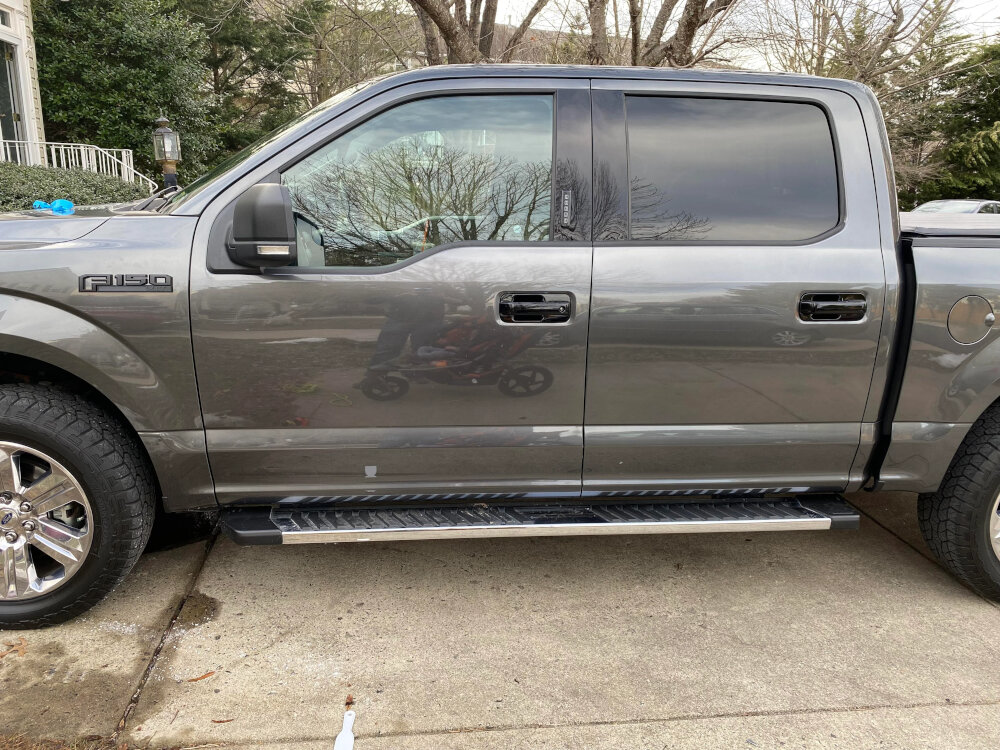
PowerStep Versus A Fixed Running Board
| Decision factor | PowerStep | Fixed running board |
|---|---|---|
| Step position | Deploys lower, then retracts | Remains at one height |
| Ground clearance | Better when fully retracted | Board and brackets remain exposed |
| Complexity | Motors, controller, wiring, and pivots | Mostly structural hardware |
| Maintenance | Mechanism needs cleaning and inspection | Inspect finish, fasteners, and brackets |
| Failure behavior | May bind, stop, or remain deployed | No deployment system to fail |
| Cost | Higher parts and installation cost | Usually lower and simpler |
Maintenance That Matches Official Guidance
Mud, dirt, road salt, and ice can accumulate around the linkage and create noise or binding. RealTruck’s AMP maintenance guidance says to clean the front and rear linkages and pivot points while avoiding direct pressure-washer spray at the motors. After cleaning, it calls for silicone dry-film lubricant on linkage arms and pivot pins, followed by cycling the steps.
The same guidance warns against grease, oils, penetrants, and tread-surface dressings. A slippery coating on the stepping surface creates its own hazard, while a sticky lubricant can hold grit in a moving joint. Service the mechanism when contamination appears rather than waiting for a fixed calendar interval, and inspect both sides so a slow linkage is noticed before the motor repeatedly fights it.
Diagnose By System, Not By Guessing At The Motor
A board that does not move can have a power, ground, controller, signal, connector, motor, linkage, or obstruction problem. A board that starts moving and reverses may be reacting to binding or resistance. Intermittent operation can follow contamination, a loose connection, damaged wiring, or a control input. Replacing a motor first is expensive and may leave the actual fault untouched.
| Symptom | First safe checks | Escalate when |
|---|---|---|
| Neither side operates | Battery condition, fuse, controller connections, visible harness damage | Power or network testing is required |
| One side is slow or binds | Debris, ice, damaged linkage, loose fasteners, asymmetry | A linkage is bent, seized, or unsafe to move |
| Board reverses or stops | Clear obstruction and inspect pivot movement | It repeats after cleaning and visual inspection |
| LEDs fail but board moves | Visible light wiring and connectors | Harness repair or electrical diagnosis is needed |
| Board remains deployed | Keep people clear and inspect for an obvious obstruction | It may move unexpectedly or creates a driving hazard |
Stop using the system if a bracket is cracked, hardware is loose, wiring is damaged, the board deploys unexpectedly, or movement could trap a hand or foot. Use the official troubleshooting path or a qualified installer instead of applying power directly to unidentified components.
Warranty And Used-Kit Reality
Current RealTruck warranty language says coverage is limited to the original consumer and is not transferable. It also excludes problems tied to improper installation, modification, inadequate maintenance, misuse, and road or off-road hazards. The warranty page instructs owners to verify eligibility for the specific part number and requires proof of purchase and product information for a claim.
This makes documentation valuable. Save the invoice, kit and component labels, installation instructions, installer record, photos after installation, and maintenance notes. A used system should be priced as an out-of-warranty assembly unless the current warranty provider confirms otherwise in writing.
Plan For Replacement Parts Before Choosing A Kit
Powered boards remain serviceable only when the exact generation and application can be identified. Before buying, locate the replacement-parts section for the selected part number and note which motors, linkage assemblies, controllers, lights, harnesses, and trim pieces are currently listed. Availability today does not guarantee indefinite support, but a documented parts path is stronger than an unbranded system with no application record.
For an existing PowerStep, record labels before corrosion or road debris makes them unreadable. Photograph the controller, motors, linkage castings, board ends, connectors, and bracket positions. If one component fails later, compare its complete number and revision with the official instructions instead of ordering by appearance. Do not mix generations or left/right components unless technical support confirms compatibility.
Also include diagnostic labor in the ownership budget. A less expensive replacement part is not a saving when several hours are spent tracing an electrical or mechanical fault that should have been identified first.
Related GarageSanctum Guides
- Compare AMP Research with other power running-board options.
- Choose the right running-board type for your truck.
- Plan power running-board drop and installation cost.
- Maintain power running-board pivots without using the wrong lubricant.
- Identify an unknown running-board manufacturer and kit.
- Find and evaluate a professional running-board installer.
Source Notes
- RealTruck AMP Research brand page lists current product families and publishes maintenance and troubleshooting guidance.
- AMP Research PowerStep product page provides current design, installation, application, and kit information.
- AMP Research PowerStep XL product page documents the lower-deploying XL family and vehicle-specific installation requirements.
- AMP Research PowerStep XTreme product page documents the dual-motor family and application-specific installation notes.
- AMP Research PowerStep Smart Series product page describes app-based override controls on supported applications.
- AMP Research warranty policy provides current eligibility, exclusions, claim requirements, and transferability terms.