Important things to consider when changing your garage door opener
Many garage door openers last roughly 10 to 15 years, but age alone is not the only reason to replace one. With proper maintenance, you can prolong this lifespan and use it even longer. However, eventually a unit you have been using will show signs of its true age. When this happens you need to replace the garage door opener. In some cases, a sensor, remote, wall control, gear, trolley, or setting repair is enough; in others, replacement is the safer long-term choice. Use the checks below to decide whether the opener is the problem, whether the door itself needs service, and what to confirm before installation.
Quick Answer: Replace The Opener Only After Checking The Door
A garage door opener moves the door, but it should not be used to overcome a heavy, unbalanced, binding, or damaged door. Before replacing the opener, disconnect the opener with the door closed and check whether the door moves smoothly by hand. If the door is very heavy, crooked, drops quickly, has loose cables, or has spring damage, stop and call a garage door professional.
For older openers, replacement is often the safer path when the unit lacks modern entrapment protection, reliable photo eyes, force reversal, rolling-code security, or smart-control safeguards. For newer openers, a failed remote, wall control, safety sensor, trolley, gear, or travel setting may be cheaper to fix than replacing the whole operator.
| Check first | Why it matters | Best next step |
|---|---|---|
| Door balance and springs | High-tension springs and cables can cause injury if handled incorrectly. | Do not adjust torsion springs yourself; use a qualified technician for spring/cable work. |
| Safety sensors and reversal | Modern openers rely on obstruction detection and photo-eye alignment. | Test monthly with the manual’s reversal procedure and replace old or unsafe operators. |
| Door size and material | A heavy insulated or wood door needs more torque than a light single door. | Match horsepower/drive type to door weight, track condition, and manufacturer guidance. |
| Drive type | Chain, belt, screw, and direct-drive openers trade off noise, price, and maintenance. | Choose belt/direct drive for quiet attached garages, chain for value, and confirm rail length. |
Related GarageSanctum guides: compare the best garage door openers, review a legacy Craftsman chain-drive opener, troubleshoot universal garage door remotes, or browse the garage door opener hub.
Safety Notes Used For This Refresh
- DASMA safety guidance treats garage door springs and safety cables as high-risk components that warrant professional inspection when protection is missing or damage is suspected.
- The CPSC notes that residential garage door openers manufactured on or after January 1, 1993 must comply with additional entrapment-protection requirements.
- Federal UL 325 updates add requirements for unattended operation accessories, which matters when replacing an older opener with app or remote-monitoring features.
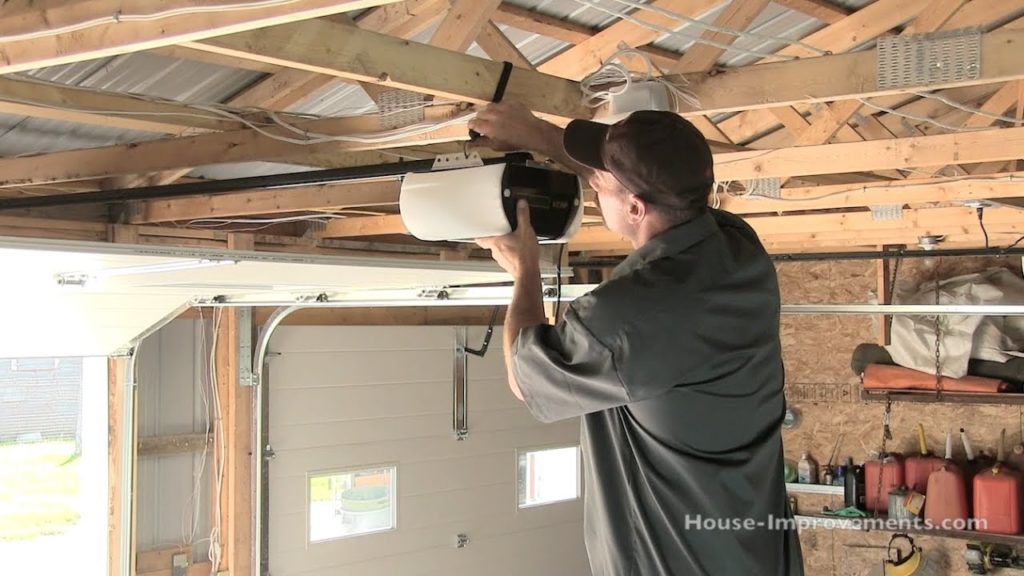
The electric motor isn’t always the broken part to change
Most people believe that the first component that will fail in a garage door opener is the electric motor. This is a common myth. In general, all moving parts can fail and electric motor is actually one that can last the longest. If you notice unusual sounds or the door will not open or close properly, do not assume the motor is the first part to replace. Replacing the motor or whole opener can be expensive and may not solve a door-balance or track problem. You will still encounter the same problem and you will still have to find the malfunction.
Instead, you need to check all moving parts of the system. In most cases, springs, cables, rollers, hinges, tracks, or the door balance are the real problem. Do not replace or adjust high-tension torsion springs as a casual DIY job.
Here we must point out that springs and coils should be replaced by a professional. They are under tension and if you don’t know what you are doing a serious mistake can occur. This can damage other components of the system or even worse, you can get injured. A professional knows what he is doing so there is no risk at all.
Alignment of the torsion spring of the garage door opener
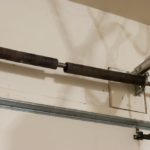
Many garage doors use torsion springs, but the opener and the spring system are separate parts of the assembly. They usually can last as long as the rest of the unit but the misalignment might occur. When this happens the opener will be much slower and you can hear all kinds of sounds. Eventually, it wills top operating which can make you believe that the electric motor failed. There is a basic balance check many homeowners can perform without touching the springs.
To check door balance, disconnect the opener with the door closed, lift the door by hand to about halfway, and see whether it stays near that position. It should stay in place and shouldn’t move. If it moves then the torsion spring isn’t properly balanced or aligned. If the door will not stay balanced, call a garage door professional before installing a new opener.
Choose a suitable garage door opener power rating to modify
Match the opener to the door’s actual size, weight, insulation, track condition, and balance. Many modern residential openers use 1/2 HP, 3/4 HP, or equivalent DC-motor ratings, but the door must still move correctly by hand before the opener is installed.
An underpowered opener on a heavy or unbalanced door can wear faster and may hide the real problem. This is an essential tip if you are looking to boost the lifespan of the entire system.
Understanding the drive system
There are three main options when it comes to drive mechanism. The first is belt drive which is the quietest, the most expensive and the most durable. You will need this mechanism if your bedroom is above the garage.
The second option is the screw drive mechanism. It is more affordable than the belt drive and also very durable. It is a bit louder and comes in most mid-range models.
The last option is chain drive which makes a lot of noise but the price is extremely affordable and can be used for all kinds of garage doors. Almost all entry-level models come with this drive type.
Installation
The outline below is only a planning checklist. Always follow the specific opener manual, disconnect power when required, use proper supports, and hire a professional if the door is heavy, unbalanced, damaged, or uses spring/cable work you are not trained to handle.
- The first step is to measure the distance between the ceiling and the garage door. Place the opener on the ladder and open the door. You can measure the precise distance.
- Use the mounting hardware and angle iron pattern required by the opener manual and ceiling structure; do not improvise a bracket that changes load paths or clearances.
- Install the new wiring. Some of you will want to use old wiring in order to save time, but this is a mistake. By using old wiring you can cause severe malfunctions and damage the new unit. By using new wiring you will be positive that the overall system will last as long as possible.
- This step helps you adjust the opening force. It should be around 5 pounds for most garage doors. You can turn the adjustment screw for 1/8 and check the alignment. If the garage door close properly you are done. Make adjustments as long as you need to ensure proper closing and opening.
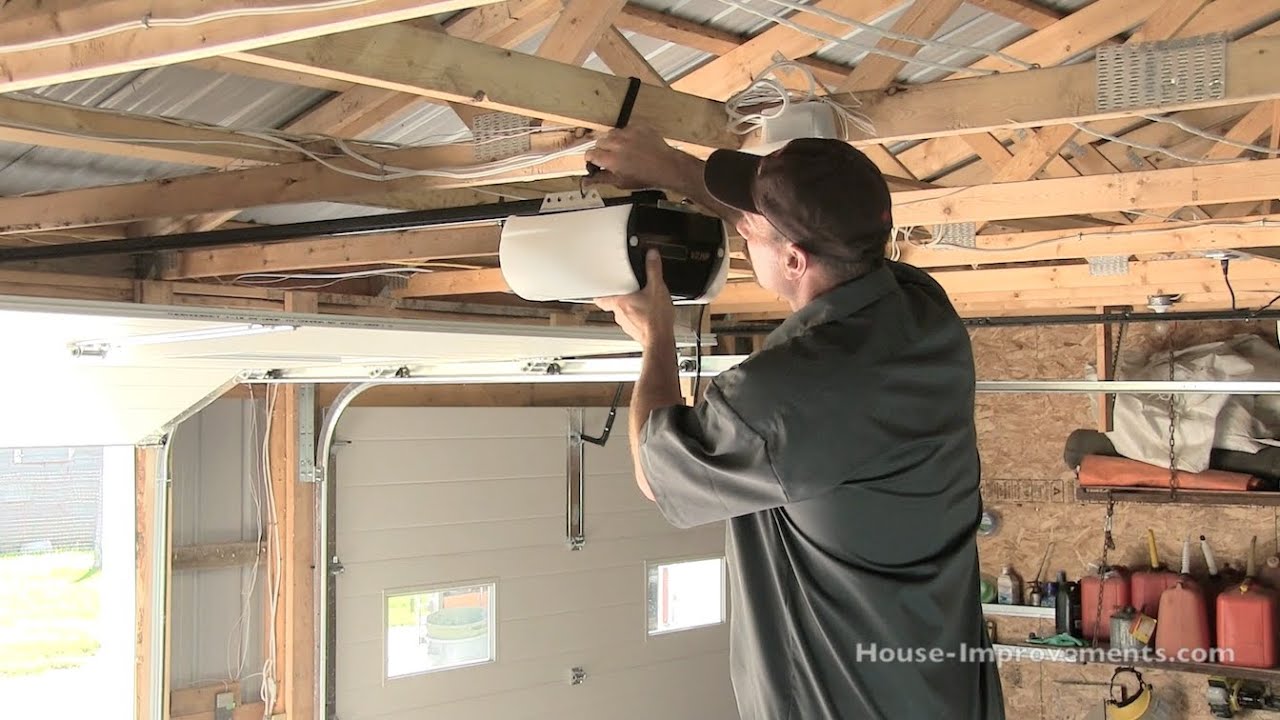
- Install the opener hardware, rail, header bracket, arm, controls, safety sensors, and accessories exactly as the manual requires. This step will vary from model to model and may be completely different than we can present you with. In order to ensure there are no mistakes, we will tell you to look at the user manual of that particular model. This step can take time, especially when sensor alignment, travel limits, force settings, and reversal testing are done correctly.
Conclusion
The right path depends on whether the failure is in the door, the opener, the controls, or the safety system. First, you need to make an inspection and find the main issue. If the malfunction involves unsafe reversal, missing photo eyes, damaged springs, loose cables, or a very old opener, replacement or professional service is usually the safer call.