Hacking garage door: Facts you need to remember and how you can eliminate this type of risk
It isn’t a secret that a garage door is the weakest and the most important link in the security of your house. First of all, you have valuable items in a garage. Then you have a door that leads to your house. Imagine a scenario in which a burglar will penetrate the garage. He will easily get into the house despite the fact you have the latest alarm system.
Hacking garage doors and garage door openers is a sad reality. But, there are a lot of things you can do to prevent this from happening and to protect yourself. Don’t ever forget that a garage door opener uses digital technology and wireless systems meaning that older or poorly secured systems can be more vulnerable than modern rolling-code openers. The useful homeowner question is not how attacks work in detail, but which upgrades and habits reduce the risk. All of that will be mentioned and explained below.
Garage Door Opener Security Checklist
Most homeowners do not need technical attack details. The practical goal is to reduce risk: replace very old fixed-code openers, keep remotes controlled, secure the door between the garage and the house, and protect any smart opener account with strong login settings.
| Old fixed-code remotes | Dip switches in the remote or opener receiver. | Upgrade to a modern opener or receiver with rolling-code security. |
|---|---|---|
| Lost or shared remotes | Unknown remotes, old vehicles, tenants, or previous owners. | Erase opener memory and re-pair only the remotes and keypads you use. |
| Smart opener access | Weak account password, shared app access, or unsecured home Wi-Fi. | Use a strong password, enable multi-factor authentication when available, and secure the router. |
| House entry from garage | Unlocked interior door or weak deadbolt between garage and living space. | Treat the garage-house door like an exterior door with a lock and good habits. |
4 rows
Scroll horizontally to view all columns.
Related GarageSanctum guides: review why older garage door openers may need replacement, compare current garage door openers, or browse more garage safety and security topics.
First garage door openers and safety precautions
The first garage door opener was invented in the United States in the 20s and it took the entire country like a storm. This system was basic and it had a wired keypad. A user will reach the keypad from the car, type the code and open the door. Eventually, we moved to wireless technology.
Wireless technology allowed us to use a remote control that could be used from the car. Now you don’t have to enter the code each time you want to open the garage door and the entire process was much easier. The problem here was the fact most brands used the same codes. This simply meant that if you buy 10 remote controllers one of them will open your garage door. Burglars soon realized that and they exploited the system and gained easy access to the garages.
The solution became available in the dip switch technology. What this means is that each system has 8-12 switches that must be positioned in the same order on the remote controller and the garage door opener in order to open the door. There were between 256 and 4.096 possible combinations. Burglars found this system complicated to hack, but they noticed that computers can do it within seconds. It was a decent safety system for a short period of time, but eventually, it had to be replaced and upgraded.
Samy Kamkar’s hacking method
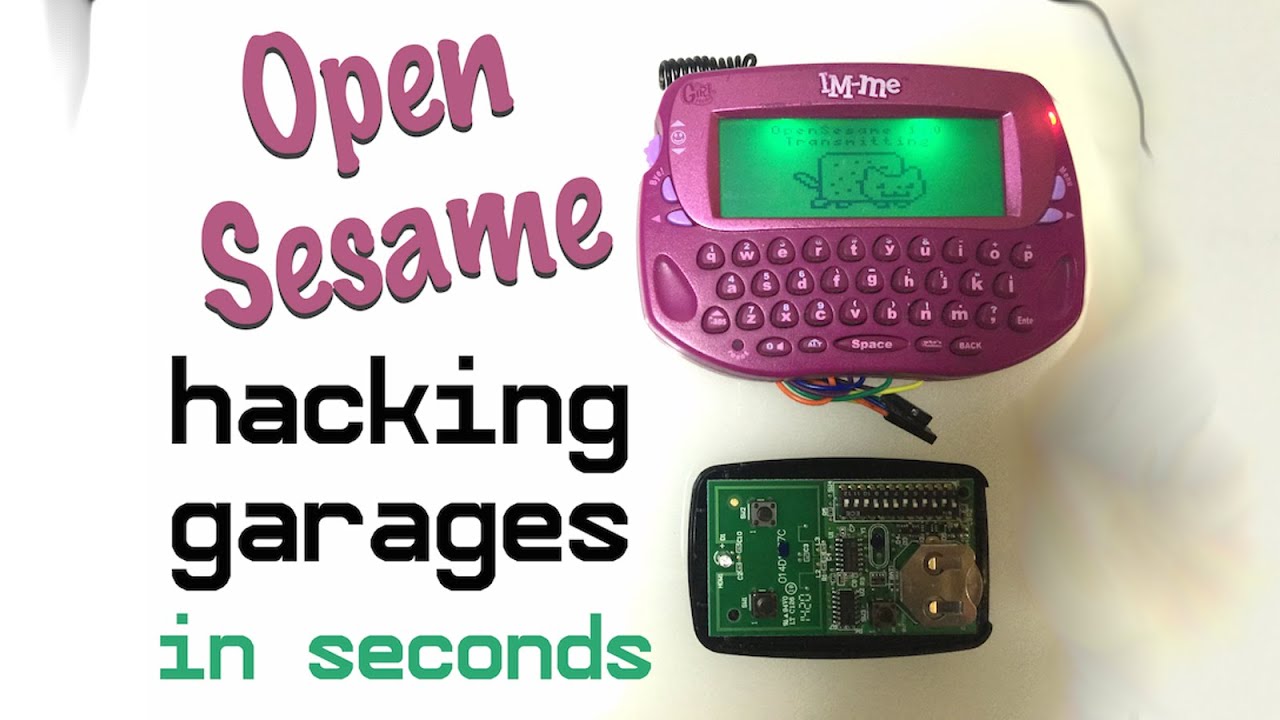
You may have heard of Samy Kamkar. He publicly demonstrated that some fixed-code openers were vulnerable to inexpensive replay-style attacks. He basically discovered that there are limited possible combinations and he showed that limited code spaces can be abused. Most of the garage door openers were affected by this hack.
You should check does your system has this technology. If it uses dip switches (open the remote and look for the 8-12 switches) you should upgrade the system as soon as possible. If your opener uses dip switches or another fixed-code system, treat it as outdated and plan an upgrade rather than relying on secrecy. It is important to add that you can call the manufacturer of your garage door opener and ask them about the technology that particular unit uses. Almost all garage door openers designed and made after the year 1993 don’t use this technology.
Rolling code technology
Rolling-code technology was a major improvement over fixed-code systems. It uses a new code each time you open or close the garage door so the system won’t use the same code two times, which makes simple reuse of a captured code much harder. This system is also known as hopping code technology and it was reasonably successful. Although, the next upgrade made the system so much better.
“man-in-the-middle” hacking method
Some older rolling-code systems have had relay or capture weaknesses. It was developed by Samy Kamkar as well. The homeowner takeaway is simple: if an opener or remote generation is known to be weak, replace or update it instead of assuming any wireless system is permanently secure.
The upgrade made this hacking method useless by implementing fast expiring codes. It simply means that the code will expire within seconds or an even shorter period of time and you will have to use another code. It sounds simple and it is, but it reduced the usefulness of older capture attacks.
You need to check does your system has this advantage. Call the manufacturer or the seller and ask them about the rolling code technology and the expiring code upgrade. It is possible that you have to upgrade the firmware on the unit to get this system. If it isn’t available for your old unit, make sure to replace it with a brand new garage door opener.
Internet hacking method
These days garage door openers use the internet to allow the users to connect to the unit itself and control it. Internet-connected openers add account and network security considerations. It is rare and the risk is relatively low but there is still some threat here.
In order to protect yourself the most, start with strong router security, updated firmware, a strong opener-app password, and multi-factor authentication when available. No single device blocks every attack. Keep the router and phone updated, avoid shared passwords, review app access, and secure the interior door from the garage to the house.
Ultimate protection
For better protection now, focus on layered risk reduction. Investing in the new garage door opener is the first and the most important thing you can do for your protection. A modern opener can reduce known risks, but no connected or wireless product is immune to every possible attack. The second thing is to invest in a separate lock between the house and the garage. These steps improve security, but they do not make any home 100% risk-free. See more about garage safety and security.