How to Use an Air Compressor to Fill a Tire?
You might get out of the grocery store only to find that your vehicle has a flat tire, what do you do? It is important to know how to inflate your tire otherwise it can cost you a lot of money to get someone out to help for a job you could have done yourself if you had the know-how and the right tools.
Understanding what the right tire pressure is for your tires can not only keep you safe but prolong the life span of your tires and ensure your car uses fuel as economically as possible.
Let’s have a look at some of the most common questions regarding tire pressures and inflating your tires on your own.
Filling a Tire With an Air Compressor: Quick Answer
Use the tire pressure listed on the vehicle placard or owner manual, check pressure when the tire is cold, connect the air chuck firmly to the valve stem, add air in short bursts, and recheck with a gauge before replacing the valve cap. Do not use the tire sidewall number as your normal target pressure; that marking is usually a maximum tire rating, not the vehicle recommendation.
If you are buying equipment for this job, the practical setup is simple: a portable tire inflator or compressor, an accurate gauge, an air chuck that seals well, and a 12V or cordless power source that can reach all four tires.
| Find the target PSI | Use the driver-door placard or owner manual | This matches the vehicle load, handling, and tire setup. |
|---|---|---|
| Start cold | Check before driving far or after the vehicle sits | Warm tires read higher and can lead to underinflation later. |
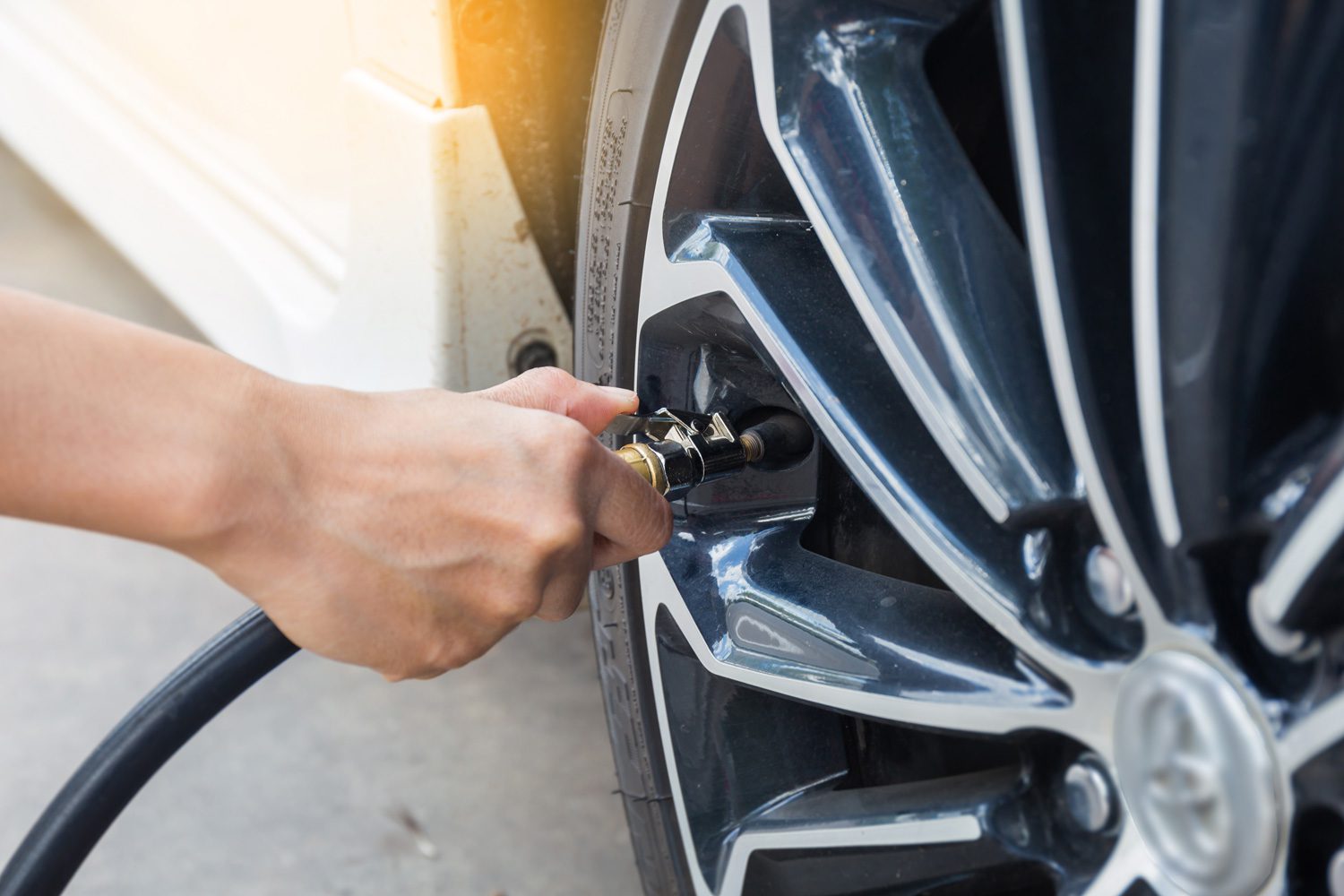
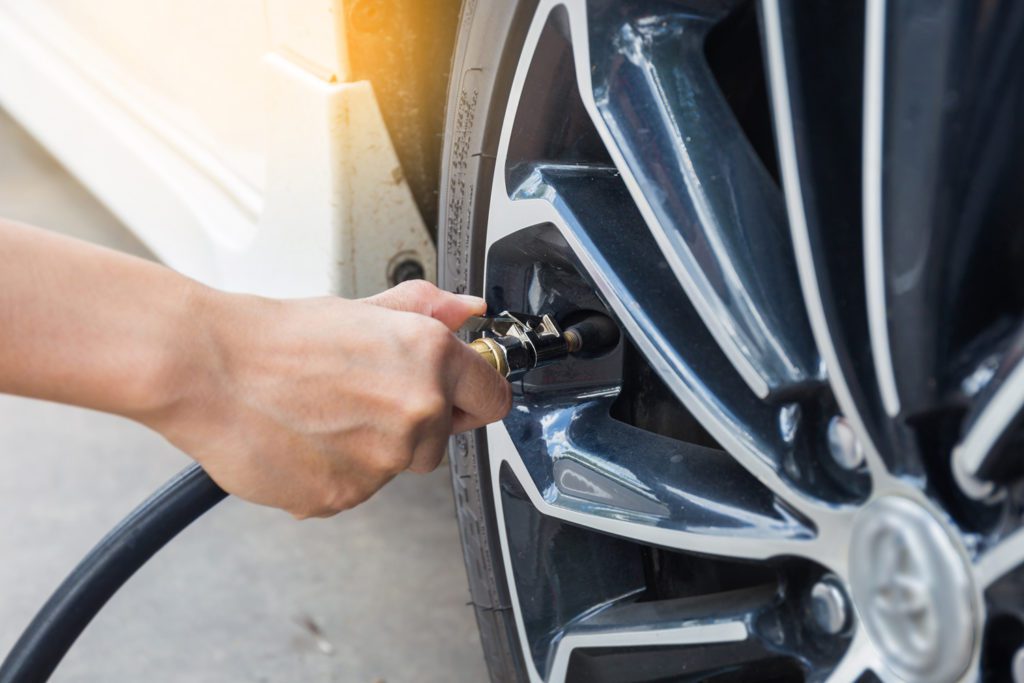
| Connect the chuck | Push straight onto the valve stem and listen for leaks | A poor seal wastes air and gives bad readings. |
| Add air slowly | Inflate in short bursts and recheck with a gauge | This avoids overshooting the target PSI. |
| Stop if damage is visible | Do not inflate a tire with cuts, bulges, exposed cords, or severe sidewall damage | Damaged tires can fail even if pressure comes back up. |
5 rows
Scroll horizontally to view all columns.
Disclosure: This page may contain affiliate links. If you buy through these links, GarageSanctum may earn a commission at no extra cost to you.
Compare tire inflators and gauges on AmazonCan I drive with low tire pressure?
Driving with low tire pressure does not only lower your fuel efficiency but it can also be very dangerous. Sometimes it is out of your control and you might be forced to drive with low tire pressure, then it is important to keep the following in mind:- Only drive short distances and at low speeds. Driving long distances on low tire pressure can lead to tire failure.
- Avoid driving with excessive weight in your vehicle. Remove all excessive weight if possible. Adding extra weight can add stress to a tire that is already low on pressure.
How Long Does It Take to Inflate A Car Tire?
The time it takes to inflate a car tire can vary, depending on what type of inflator you use. When topping up your tires at a gas station it can take as little as 20 seconds to fill up your tire to the recommended PSI. This is due to the standard and size of the compressors that are used by gas stations. When using a portable compressor, it might take a little longer. Because a portable compressor is a lot smaller than one used by gas stations. A normal portable compressor might take anything from 30 to 50 seconds to inflate a flat tire to the manufacturer-recommended PSI.What is the 4 PSI rule?
The 4 PSI rule has come under a lot of criticism in the past but in recent times there are many companies that have started using this method. It has become a great tool in finding the ideal tire pressure for any terrain. Let’s have a look at how you can apply this method. As a starting point, use the recommended cold tire pressure on the vehicle placard or in the owner manual. Do not use the sidewall number as your everyday target pressure unless the vehicle manufacturer specifically tells you to. After filling your tires to the recommended PSI, drive for about an hour to warm up the tires. If it’s gone up by 4 PSI, then your tire pressure is on the spot. Although this will not likely be achieved on the first try it will give you a good indication. After the one-hour drive, if your tire pressure has gone up with more than 4 PSI then your starting pressure was too low. The same is true for the reverse, if it’s gone up with less than 4 PSI then your starting pressure was too high. You should then adjust your tire pressure with 2 PSI in the appropriate direction and use that PSI as your starting point the next time you have a cold start. For example, if your tire pressure is 30 PSI when you cold start your vehicle and after an hour of driving your tires measure 36 PSI, then for the next cold start you should fill your tires to 32 PSI and repeat the exercise. If after the one hour drive your tires measure 32 PSI, then you should lower your starting point to 28 PSI and repeat the exercise.
Air Compressor Attachments to Fill Tires
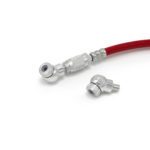
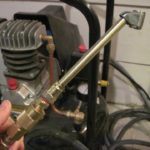
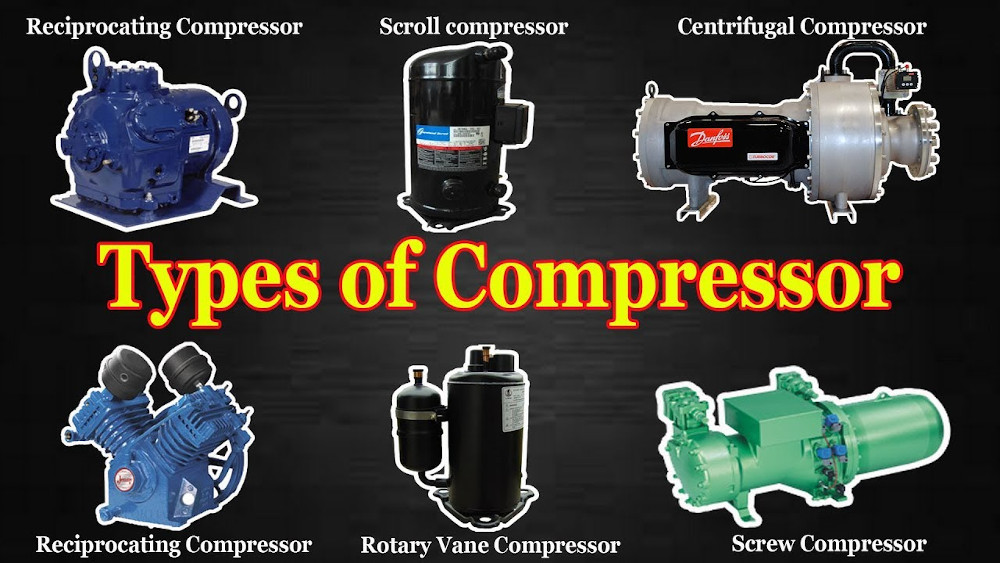
There are many different attachments and accessories that can be used to help you fill a tire with the recommended PSI. The compressor alone will often is not able to inflate your tires, you need the right attachments that fit your tire valve. An air chuck is probably the most common attachment on any air compressor. An air chuck allows the air to be transferred to the tire. It also has a clip that holds it in place over the tire nozzle. Another common attachment is an air compressor gauge. A gauge is used to measure the PSI of your tire and allows you to inflate your tires to the manufacturer recommended PSI. It gives you an accurate indication for when you need to fill up a tire with low pressure.How to use a 12V air compressor to inflate your tire.
The best way to inflate your tires if you are not close to a gas station is to use a 12V portable air compressor. This device ensures you can keep your tires at the right pressure. There are steps that you need to follow to ensure you use your 12V air compressor correctly and you inflate your tires to the recommended PSI.- Put the power cord in the “cigarette lighter” or 12V power receptacle.
- Remove the valve stem caps from each tire.
- Place the nozzle over the valve stem and push lever down to lock it in position.
- Turn the compressor on and allow it to inflate the tire to the recommended PSI.
- When a tire is pressurized to the desired PSI, turn off the compressor and remove the inflation nozzle.
- Once removed, put back the valve stem cap that you removed in step two.