Air Compressor Types – Complete Guide
Air compressors have made a big difference in our world as we know it. It has not only enabled assembly lines to speed up its processes, but it has also impacted each of our lives in one way or another. From keeping cool large buildings to inflating our vehicles tires, these are all ways that air compressors are used today.
Air compressors may seem very complicated but once you understand how they operate and what they are used for then you will be able to handle yourself when looking to acquire one for yourself.
Quick Answer: Choose The Compressor Type By Duty Cycle And CFM
For most garage owners, the practical choice is not “the biggest compressor.” Start with the tools you want to run, then compare required CFM at working PSI, duty cycle, noise, power supply, portability, and whether you need oil-free air. A tire inflator, brad nailer, impact wrench, spray gun, and sandblaster do not need the same compressor.
| Compressor type | Best fit | Watch before buying |
|---|---|---|
| Portable reciprocating | Tires, nailers, light garage tools, occasional DIY work. | Match SCFM/CFM at the tool’s PSI, not just tank gallons or peak PSI. |
| Stationary single-stage or two-stage | More frequent pneumatic tool use, larger tanks, higher air demand. | Confirm electrical circuit, noise, oil maintenance, drain routine, and space. |
| Rotary screw | Shops with long run times and steady air demand. | Usually overkill for a casual home garage; compare verified performance data and service needs. |
| Centrifugal | Large industrial systems with very high volume needs. | Not a normal homeowner choice; belongs in facility-scale compressed-air planning. |
Related GarageSanctum guides: compare air compressors, review two-stage compressors, see tire air compressors, or check air-compressor CFM.
Source Notes Used For This Refresh
- CAGI’s performance-verification material is useful for comparing verified rotary-compressor and dryer performance rather than relying only on marketing claims.
- The Compressed Air Challenge sourcebook treats compressor type, controls, storage, leaks, pressure, and system demand as connected parts of compressed-air performance.
- OSHA cautions that compressed air used for cleaning must be reduced below 30 psi and used with chip guarding and PPE; do not use shop air casually as a cleaning blast.
How do air compressors work?
It is hard to think that air compressor systems have not been around for very long. In the past vehicle, assembly workshops made use of complex systems with belts and furnaces to power the assembly line. Today this has been replaced by air compressors. Many pneumatic tools run on compressed air, but the right compressor depends on the tool’s CFM, PSI, and duty-cycle requirements.
An air compressor is a tool that converts power into pressurized air. A compressor normally uses an electric motor or gasoline engine to compress air into a receiver tank or compressed-air system. Through one or more methods, a compressor raises air pressure so stored air can be used when demand appears. It is easy to think a compressor is a pump, but pumps move liquids while compressors raise the pressure of gases.
What are the four types of air compressors?
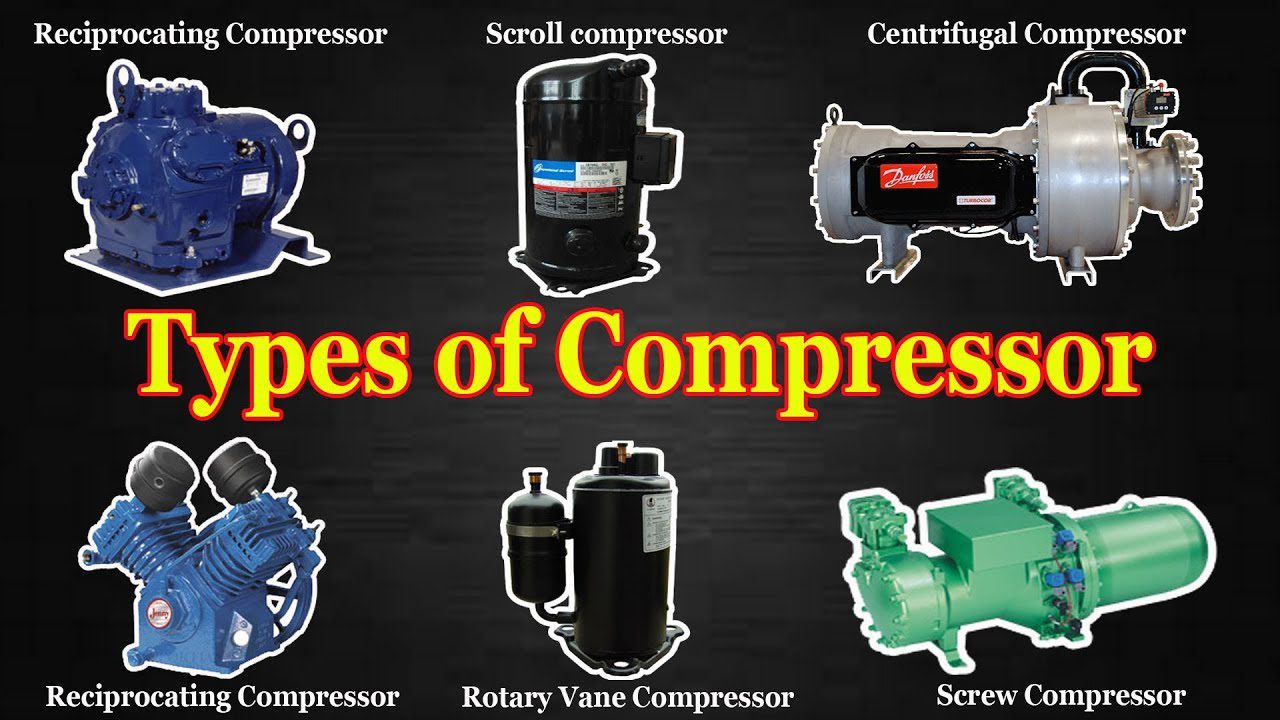
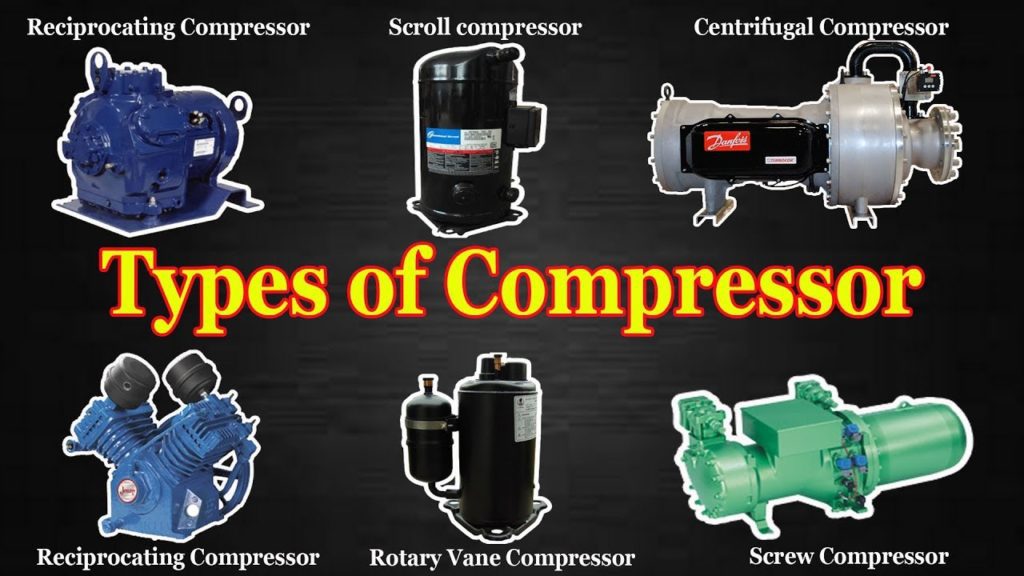
Air compressors come in many different shapes and sizes, and some of them you will not even think it’s a compressor. But do not worry, when it comes to how they work several compressor families matter most for garage and shop buyers: reciprocating, rotary screw, and centrifugal machines, plus portable inflator-style units for light tasks.
What is a Positive Displacement Compressor?
Although there are many different positive displacement compressors, they all use the same principles. They work with different internal mechanisms to displace the air. Outside air is brought into a cavity that stores it and then it is slowly compressed to increase the air pressure and increase the potential energy. These compressors are used for a wide variety of needs and also describes all the compressors that make use of air displacement.
What is a Rotary Screw Compressor?
A rotary screw compressor is equipped with an internal cooling system that does not require a great deal of maintenance. It is popular in shops and industrial settings because it can support longer run times than many small reciprocating units. These are often shop or industrial machines, and packages may be oil-flooded or oil-free depending on the air-quality requirement.
A rotary screw air compressor uses two internal rotors, that turn in opposite directions, to generate its energy. These air compressors rely on internal cooling and oil-management or oil-free design details to handle longer operating cycles. The rotors trap the air and build up the pressure in the housing unit, from there it is dispensed for use. These compressors range greatly in size and can be as small a 5 horsepower up to as big as 350 horsepower.
What is a Reciprocating Air Compressor?
A common garage compressor for smaller home jobs is a reciprocating air compressor. Unlike a rotary screw compressor, many reciprocating units are intended for intermittent use; some are oil-lubricated and others are oil-free, so check the model’s maintenance requirements.
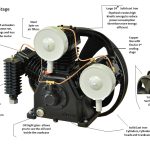
These air compressors make use of a piston inside the cylinder that displaces and compresses air to build up the desired pressure. If you are looking for something that can generate high amounts of pressure, then you might want to think about a reciprocating air compressor with a multi-stage compressor. Two-stage and larger multi-stage compressors can support higher air demand, but horsepower alone is less useful than delivered CFM at the pressure your tools require.
What is a Centrifugal Compressor?
Centrifugal compressors use dynamic compression and are normally selected for large-volume industrial systems rather than casual garage use. A centrifugal air compressor puts air through a diffuser, that cools and slows air to build up potential energy. Some types can run oil-free and a centrifugal compressor requires even less maintenance than its reciprocating or rotary screw compressor counterparts. They are typically used for larger sites like steel manufacturing centers and chemical plants.
How big of an air compressor do I need?
Many things affect compressor size, but start with two practical questions:
- Where will you use the compressor, and which tools or inflation jobs must it support?
- What CFM and PSI do those tools require at the duty cycle you expect?
Air compressors come in many different sizes and you don’t want to get caught not having a big enough compressor, and you also do not want to spend a fortune on a compressor that is much bigger than you need. If you will need to use the compressor at more than one location, then you might want to think about a portable compressor. If you will only be using it in your garage, then I will suggest investing in a stationary air compressor. This is an important first step in deciding how big a compressor you need.
When checking compressor requirements, keep airflow, pressure, tank size, and duty cycle in mind. The airflow of compressors is measured in two ways delivered CFM or SCFM (cubic feet per minute) at a stated PSI (pounds per square inch). When you are selecting a compressor then you need to know the PSI and CFM requirements of your power tools. If you are planning on using only one tool at a time, then use the tool with the highest PSI and CFM requirements for choosing your compressor size. This helps prevent weak tool performance, long recovery times, and overheating from asking a small compressor to do continuous work.
A practical rule is to choose a compressor with a reasonable margin above the tool’s delivered-CFM requirement at working PSI, while avoiding an oversized unit that is noisy, expensive, or poorly matched to your circuit.
Final Thoughts
Understanding how an air compressor works makes it easier to choose one for your garage, shop, or facility. For a garage buyer, the decision is simpler: match the compressor type, delivered CFM, pressure, tank size, noise, and maintenance to the jobs you actually do.
Understanding how an air compressor works is useful. Just as important is understanding the four different compressor systems because they are not all used for the same purpose and they have different strengths and weaknesses.